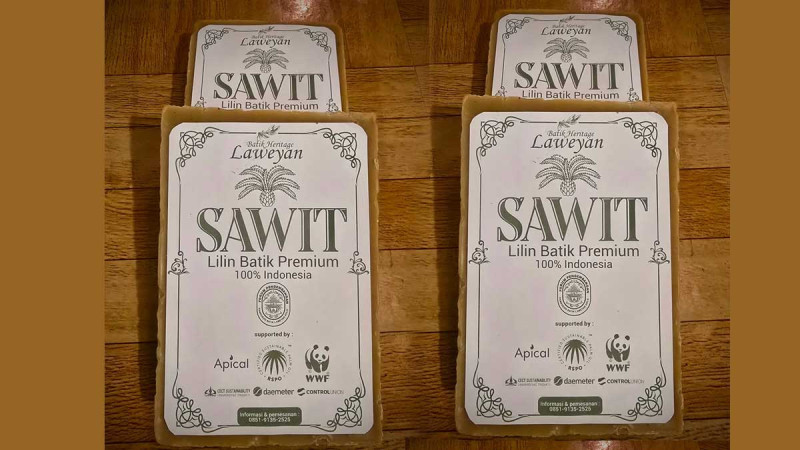
InfoSAWIT, JAKARTA – Innovation continues to drive the batik industry towards a more environmentally friendly direction. One significant change is the transformation of batik wax materials, which are now shifting from petroleum-based paraffin and animal fats to sustainable palm oil-based alternatives.
Windrawan Inantha, Deputy Director of Market Transformation at the Roundtable on Sustainable Palm Oil (RSPO), revealed that approximately 55 to 60 percent of batik wax formulas now utilize certified palm oil materials. "Previously, batik wax was made from paraffin derived from petroleum and animal fats. Now, most of its components have been replaced with palm oil-based materials," Windrawan stated.
This initiative not only reduces dependence on non-renewable resources but also paves the way for the batik industry to engage in more sustainable production practices. Since 2022, various trials have been conducted to ensure that the quality of palm wax matches that of traditional wax.
Support has come from various parties, including Apical Group, which supplies palm oil raw materials for wax production. The results have been promising, with palm wax now being marketed and attracting interest from international buyers. "We have already received orders from Malaysia. This marks the beginning of palm wax's entry into the export market," Windrawan added.
To broaden its reach and introduce this product to the public, exhibitions have become a key strategy. Palm wax products are showcased at various events, including batik exhibitions, allowing visitors to witness the batik-making process using this material firsthand. "We want the public not only to know but also to see and experience the benefits directly," Windrawan emphasized.
Despite showing positive developments, challenges remain, particularly in marketing and education. Many artisans and community members are still unaware of the potential of palm wax as an eco-friendly alternative. "We hope that the media and various stakeholders can help disseminate information that palm wax is now available and can be used," Windrawan stated.
In addition to contributing to environmental preservation, this innovation also opens new opportunities for the palm oil industry. With a dominant palm oil content, this product has the potential to create added value and expand the utilization of palm oil beyond the food and energy sectors.
Optimism is growing among artisans. In Kampung Batik Laweyan, Solo—known as one of the national batik centers—palm wax has begun to be accepted and tried by industry players. The positive response from batik makers indicates that the shift to eco-friendly materials is not just a concept but can become a reality.
With massive educational efforts and cross-sector support, palm wax has the potential to become a new standard in the batik-making process in Indonesia. This innovation marks the beginning of a green transformation in the batik industry and opens a new chapter for traditional Indonesian crafts in the global market. (T2)
Read the May 2025 edition of InfoSAWIT Magazine for more insights.