InfoSAWIT, JAKARTA – Indonesia's House of Representatives (DPR RI) has urged the government to ensure that declining crude palm oil (CPO) reference prices do not trigger excessive reductions in fresh fruit bunch (FFB) prices received by smallholders, particularly independent growers.
Ida Fauziyah, a member of Commission VI of the DPR RI from the National Awakening Party (PKB), said lower CPO reference prices should not become an excuse for palm oil mills to reduce FFB purchase prices disproportionately.
The Trade Ministry set Indonesia's November 2026 CPO reference price at US$978.90 per metric tonne, down US$63.25, or 6.07%, from US$1,042.15 per tonne in October.
During the same period, the government set the CPO export duty at US$124 per tonne and the export levy at 12.5% of the reference price, equivalent to US$122.36 per tonne.
"Lower CPO reference prices must not be used as an excuse to suppress smallholder FFB prices. Independent smallholders without partnerships with mills are always the first to feel the impact," Ida said in a statement received by InfoSAWIT on Monday (November 16, 2026).
Ida pointed to declining FFB prices in several regions, including East Kalimantan, where prices for the October 16–31, 2026 period fell IDR66.51 per kg, or 1.88%, to IDR3,476.09 per kg.
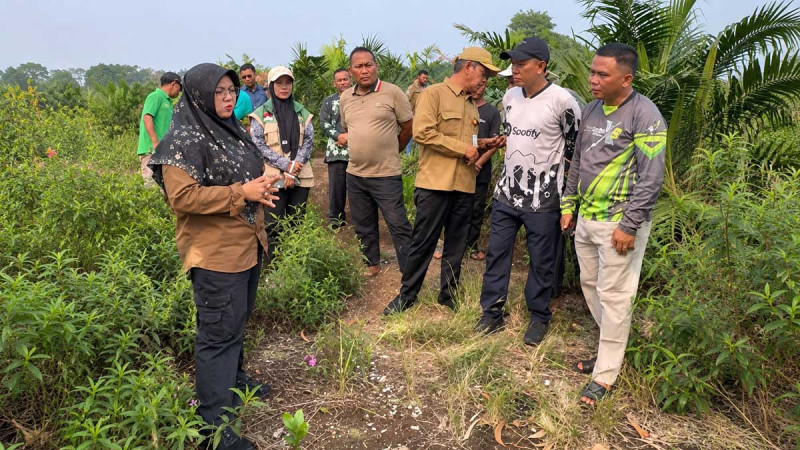
She urged regional governments to strengthen supervision and ensure palm oil mills comply with officially determined FFB prices, particularly when purchasing from independent smallholders.
Questions Over Indonesian CPO Pricing
Ida also questioned the gap between Indonesian and Malaysian CPO benchmark prices. During the reference-price calculation period, Indonesian CPO averaged US$869.07 per tonne, compared with US$1,088.73 in Malaysia.
She called for improvements to the Indonesian CPO Exchange so domestic prices can better reflect market conditions.
She also urged the government to ensure that export levy revenues managed by the Plantation Fund Management Agency (BPDP) deliver tangible benefits through smallholder replanting, fertilizer assistance, and plantation infrastructure.
Regarding the proposed one-stop export system through PT Danantara Sumberdaya Indonesia (DSI), Ida supported governance improvements but warned against additional fees that could ultimately burden smallholders through lower FFB prices. (T2)