InfoSAWIT, NUSA DUA – Malaysia is not currently facing a shortage of crude palm oil (CPO), but the potential impact of El Niño on production remains a concern for the months ahead. The effects of the weather phenomenon may take time to become visible in plantation output, with more significant consequences potentially emerging next year or later.
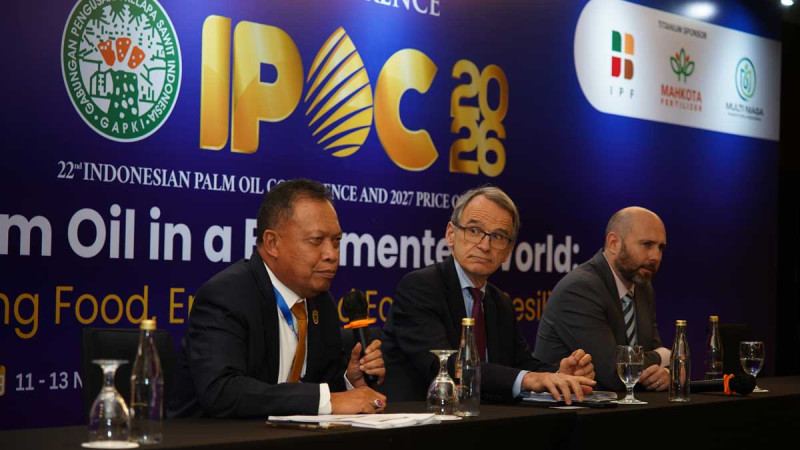
The assessment was delivered by Malaysian Palm Oil Board (MPOB) Chairman Datuk Mohamad Helmy Othman Basha during the 22nd Indonesian Palm Oil Conference (IPOC 2026) and 2027 Price Outlook, attended by InfoSAWIT on Thursday (12 November 2026) in Bali.
Helmy said Malaysia’s current CPO supply remains relatively sufficient, meaning concerns over an immediate shortage are not yet pressing. Nevertheless, developments in production over the coming periods need to be monitored closely.
He explained that the impact of El Niño on oil palm plantations is not necessarily reflected in production immediately. A time lag can occur between the weather event and its effects on crop yields, meaning the more significant impact may only become apparent in the following year or beyond.
The potential production impact is therefore an important factor for industry players assessing the global palm oil supply outlook, particularly as the market approaches 2027.
Export Levy Influences Malaysia’s Palm Oil Trade
Helmy also discussed Malaysia’s export levy policy, which is among the factors that companies consider when deciding where and how to market CPO and its downstream products.
He explained that Malaysian CPO exports are subject to the applicable levy provisions. This can influence companies’ commercial decisions, including whether to export CPO directly or process it into higher-value products before selling it to overseas markets.
The chairman also referred to the activities of Malaysian refineries, where export levy considerations form part of the economic calculations involved in deciding whether to sell CPO internationally or process it further.
Malaysia continues to export palm oil products to several destinations, including India and countries across Africa. However, export decisions must take into account the costs associated with the prevailing levy structure.
Production Outlook Remains a Key Market Indicator for 2027
Helmy’s remarks highlight how the palm oil market is shaped by more than current inventory levels. Trade policies, export costs, processing activities, and weather conditions all play a role in determining future supply.
For now, MPOB considers Malaysia’s CPO supply adequate, with no immediate indication of a shortage. However, the possible effects of El Niño on plantation production remain an important factor to watch, particularly because those effects may emerge only after a time lag.
For the global palm oil market, Malaysia’s production performance in 2027 will be closely monitored. Changes in supply from a major producing country could influence international trade flows and the direction of CPO prices. (T2)