InfoSAWIT, NUSA DUA – The palm oil industry needs to move beyond simply responding to negative campaigns and focus more strongly on securing fair competition in international markets. In Europe, this opportunity could be shaped by developments in trade relations between Indonesia and the European Union, alongside the implementation of regulations targeting deforestation.
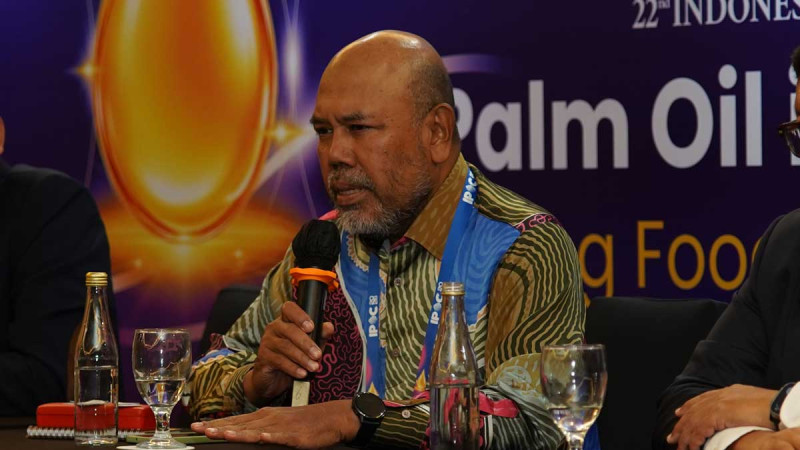
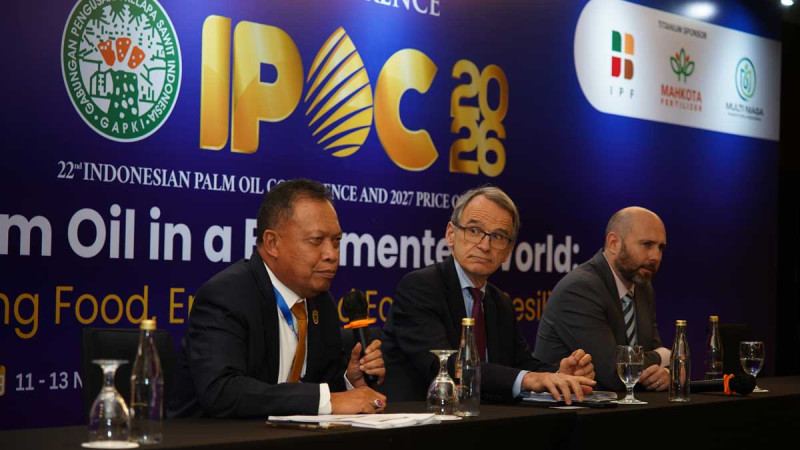
The view was expressed by Carola Macagno of Competere’s Programs and Operations team during the 22nd Indonesian Palm Oil Conference (IPOC 2026) and 2027 Price Outlook, attended by InfoSAWIT on Thursday (12 November 2026) in Nusa Dua, Bali.
Macagno said that after years of facing negative campaigns, the palm oil industry needs to adopt a broader approach to protecting its position in the global market. Rather than focusing solely on defending the commodity against criticism, the industry should also work to ensure that palm oil competes on equal terms with other vegetable oils.
She argued that fair competition is an important principle in international trade. Palm oil should be assessed under standards and requirements applied consistently across vegetable oil commodities, rather than being subjected to different treatment.
Trade Agreement Offers an Opportunity
Macagno sees developments in trade relations between Indonesia and the European Union as a potential opportunity for the palm oil sector.
She expressed hope that the trade agreement between the two sides could be signed soon and contribute to improving European market perceptions of Indonesian products.
In her view, the agreement could strengthen bilateral trade relations while creating greater scope for more balanced rules and conditions between the two parties.
Improving perceptions in Europe is particularly important for Indonesia's palm oil industry, which has faced years of criticism and negative campaigning. Stronger trade relations could help ensure that Indonesian palm oil receives greater consideration in the global commodity market.
EUDR Remains a Key Industry Concern
Beyond the trade agreement, Macagno also addressed the European Union Deforestation Regulation (EUDR), which remains a major concern for palm oil industry players.
She acknowledged that uncertainty surrounding the regulation's implementation timeline continues to be an issue. Based on her assessment during the conference, however, the EUDR was expected to proceed according to plan, although she stopped short of offering a definitive prediction, noting that the final decision rests with the European Union authorities.
With implementation approaching, industry stakeholders need to closely monitor further policy developments and prepare for the requirements that may affect access to the European market.
Macagno also argued that the EUDR should not become a justification for undermining fair competition in the vegetable oil trade.
For Indonesia's palm oil industry, developments in the Indonesia-EU trade agreement and the EUDR will be important factors shaping future access to the European market. Efforts to improve perceptions of palm oil will therefore need to go hand in hand with stronger trade relations and compliance with the requirements of destination markets.
Macagno expressed hope that progress in Indonesia-EU relations would help create a more balanced trading environment, allowing palm oil to compete fairly alongside other vegetable oils. (T2)