InfoSAWIT, NUSA DUA – Improving plantation productivity is becoming increasingly important for Indonesia and Malaysia as they seek to maintain the competitiveness of their palm oil industries amid intensifying competition in the global vegetable oil market. According to Glenauk Economics Managing Director Julian McGill, significant production gains could be achieved not only through replanting, but also by improving the performance of existing mature plantations.
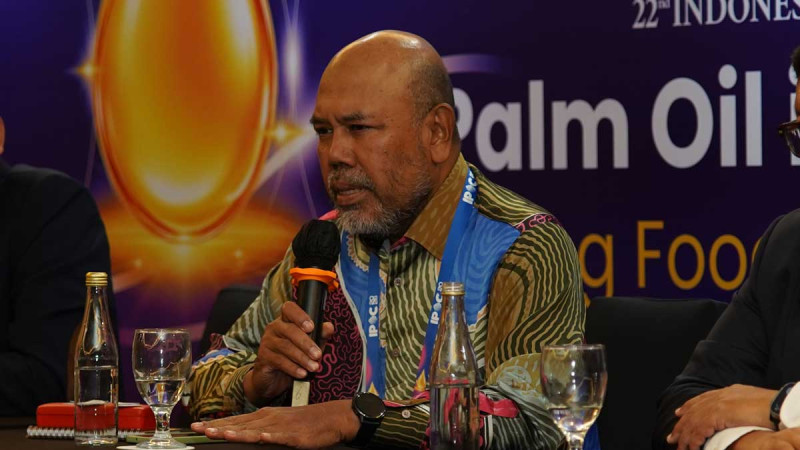
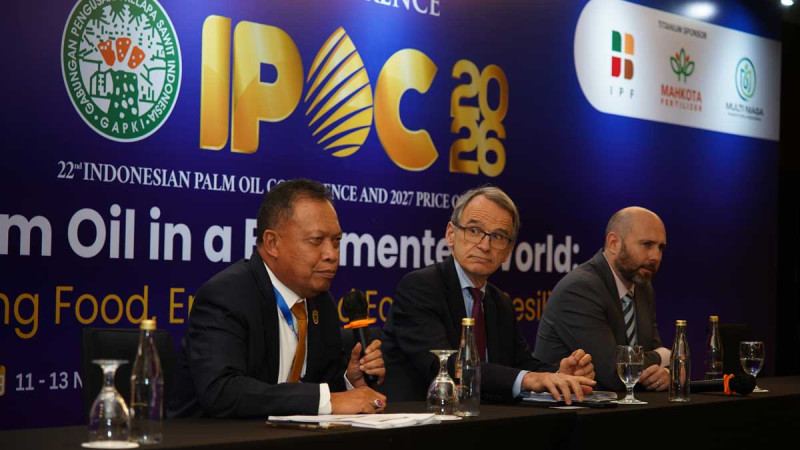
McGill shared this assessment during the 22nd Indonesian Palm Oil Conference and 2027 Price Outlook (IPOC 2026), attended by InfoSAWIT on Friday (13 November 2026) in Nusa Dua, Bali.
He said there remains considerable room to increase oil palm yields in both Indonesia and Malaysia through better plantation management and more effective cultivation practices.
Such efforts could include improving fertilizer application, developing a more skilled workforce, and optimizing the management of existing oil palm stands. These measures could help raise output without requiring producers to rely entirely on replanting programmes.
The opportunity, McGill suggested, lies in making better use of the plantations already in production through sustained investment and improved agronomic practices.
Investment Certainty Remains a Major Challenge
However, McGill cautioned that productivity improvements depend on consistent investment. Returns from plantation investment do not materialize immediately, as companies and growers must wait before higher yields translate into increased production.
He pointed to an estimated 48-month interval between an investment decision and the potential production gains it is expected to generate. During this period, changes in economic conditions, government policy, and the broader business environment can affect the outcome.
Political stability and investment certainty are therefore essential to encouraging plantation companies and smallholders to commit capital to productivity improvements.
McGill identified labour availability as a major challenge in Malaysia, while Indonesia continues to face issues surrounding land rights and legal certainty over plantation areas.
Without greater certainty in these areas, plantation operators may become reluctant to reinvest earnings in their estates.
Plantation Reinvestment Under Pressure
McGill also highlighted a tendency among some publicly listed plantation companies in Malaysia to treat their estates primarily as sources of cash flow, rather than as assets requiring continued investment and development.
He linked this approach to concerns about business risks, policy stability, and the predictability of the operating environment.
Yet improving plantation productivity requires long-term commitment, including adequate fertilization, workforce development, and better estate management.
If producing countries fail to encourage reinvestment in their plantation sectors, the potential production gains available through intensification may remain unrealized.
Productivity and Competition from Soybean Oil
McGill also referred to projections by Thomas Mielke of Oil World concerning the possibility of soybean oil gaining market share at the expense of palm oil in the future.
In his view, improving oil palm productivity will be an important way for Indonesia and Malaysia to respond to that competition, particularly as opportunities for further land expansion become increasingly limited.
Producer countries will need to ensure that plantations continue to receive adequate investment, supported by better cultivation systems, appropriate fertilizer use, and a more skilled workforce.
Productivity, therefore, is not simply a technical issue at estate level. It is also closely linked to investment certainty and long-term policy direction.
McGill emphasized that the future competitiveness of Indonesia’s and Malaysia’s palm oil industries will depend heavily on their ability to produce more from existing plantations while creating a business environment that encourages continued investment in the upstream sector. (T2)