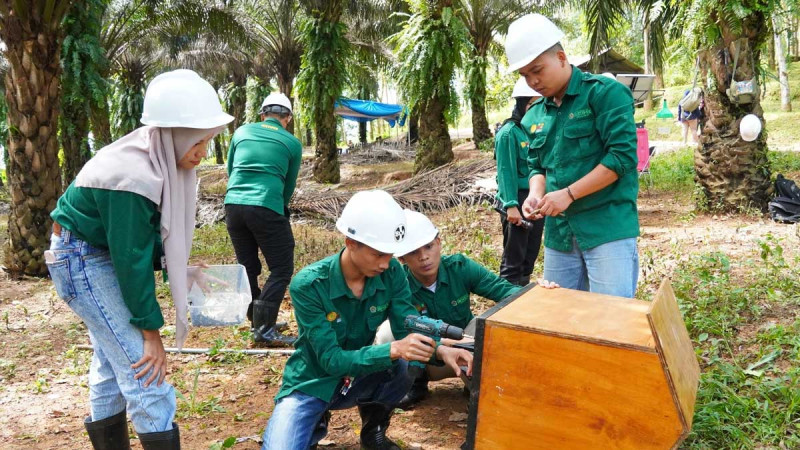
InfoSAWIT, UNGARAN – Amid rising industry demands for ready-to-work human resources, the Institute of Agriculture Stiper (INSTIPER) Yogyakarta is taking progressive steps. Through an intensive field practice program, 120 students receiving scholarships for Palm Oil Human Resources (SDM PKS) are being trained directly in the field—from palm oil plantations to downstream product processing—aiming to produce graduates who are not only knowledgeable in theory but also skilled in practice.
This program goes beyond merely sending students to the field. With a holistic curriculum, students from four study programs—Agrotechnology, Agribusiness, Agricultural Product Technology, and Agricultural Engineering—are assigned to work across disciplines. From land preparation, precision fertilization using drones, mechanical harvesting with crane grabbers, to processing fresh fruit bunches (TBS) into crude palm oil (CPO) at the campus pilot plant, all are part of a comprehensive kinesthetic learning experience.
“This is not just practice; it is a simulation of the real working world,” said Dr. Ir. Harsawardana, M.Eng., Rector of INSTIPER Yogyakarta, during a visit from the Palm Oil Plantation Fund Management Agency (BPDP) at the KP2 SEAT Ungaran plantation on June 18, 2025, as stated in an official release received by InfoSAWIT on Thursday (June 3, 2025).
He emphasized the importance of industry partners' involvement in the learning process as part of INSTIPER's commitment to producing superior human resources in the palm oil sector.
BPDP, which funds the SDM PKS scholarship program, directly reviewed the implementation of this field practice. The visit included Mr. Sukarji (BPDP Human Resource Development Committee), Rangga Rahmananda (Acting Head of the PKS Human Resources Division), and Diete Patik (Staff of the Service Program Division). Representatives from leading palm oil companies, such as Karyamas Plantation, Astra Agro Lestari, Sinarmas Tbk., Gunas Group, and Bio Inti Agrindo, were also present.
“The human resources needed in the palm oil industry must not only know the theory but also be able to work in the field, operate equipment, analyze drone data, and even prepare managerial reports. INSTIPER is already heading in that direction,” Sukarji stated in his remarks.
Moreover, students are encouraged to utilize the latest technology. During fertilization sessions, students use spreaders and DJI Agras T25 drones that can carry up to 20 liters of fertilizer solution, replacing the manual fertilization methods that have been prone to inefficiencies. For mapping and monitoring plant health, they operate DJI Matrice 4 RTK and DJI Mavic 3 Multispectral drones that can assess vegetative conditions through NDVI indices in real-time.
After aerial observations, students validate the field data using Avenza Map, checking the locations of identified unhealthy plants and analyzing the causes, whether due to pests, diseases, or nutrient deficiencies. This integrative approach instills a data-driven and technology-based work culture, in line with the operational standards of modern palm oil companies.
In the downstream sector, students also receive training at the campus pilot plant, processing TBS into CPO through stages such as sterilization, threshing, digestion, screw pressing, and clarification. They are also introduced to the production of derivative products such as RBDPO, biodiesel, soap, candles, and even palm-based processed foods like cookies and margarine.
For industry players, these skills represent a significant added value. “This practice program ensures that INSTIPER students are already aligned with industry SOPs. We can save six months on training,” said Michael Adryanto, Deputy Managing Director of Karyamas Plantation. He added that the presence of industry representatives during field practice also allows for direct alignment between academic curricula and field needs.
INSTIPER does not solely rely on internal faculty for teaching. They have established various co-curricular academies, such as the INSTIPER Drone Academy and INSTIPER Multimedia Academy, to broaden the skill spectrum of students. This approach provides students with opportunities to hone additional competencies in information technology, mapping, and visual communication.
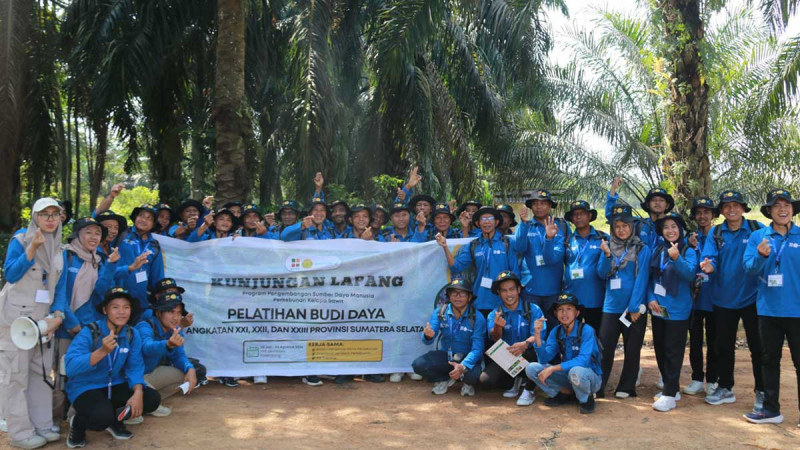
The field practice activities, held from May to July 2025, are part of INSTIPER's strategic efforts to bridge the gap between education and industry. “We are opening our doors wide for deeper collaboration with palm oil companies,” said Harsawardana, emphasizing that INSTIPER is ready to play an active role in the regeneration of human resources in the national palm oil sector.
With a technology-based approach, industry collaboration, and a focus on hands-on learning in the field, INSTIPER demonstrates how higher education can play a crucial role in shaping the future of Indonesia's strategic sector—the palm oil industry. This model of higher education not only produces graduates but also engineers, analysts, and future leaders in the plantation industry. (T2)