InfoSAWIT, JAKARTA — Indonesia continues to face significant challenges in achieving its renewable energy (EBT) targets set forth in the National Energy Policy (KEN). While the government aims for a 23% contribution of EBT to the national energy mix by 2025, the achievement only reached 14.1% by the end of 2024. To bridge this gap, the utilization of lignocellulosic biomass—such as palm oil waste—is now being touted as a potential solution.
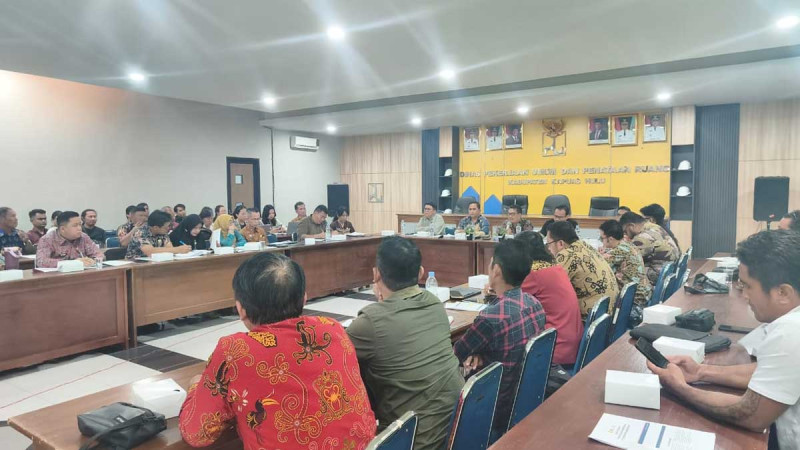
This topic was highlighted during the inaugural speech of Research Professor Roni Maryana, a Senior Researcher at the Chemistry Research Center, National Research and Innovation Agency (BRIN), held at the Sumitro Djojohadikusumo Auditorium, B.J. Habibie Building, Jakarta, on Wednesday.
Roni, who holds a Ph.D. in bioresource engineering from the University of Tsukuba, Japan, and is now the 693rd Research Professor nationally, delivered a speech titled "Innovative Technology for the Conversion of Lignocellulosic Biomass as a Source of Renewable Energy and Sustainable Chemicals." In his presentation, he emphasized the importance of technological innovation in processing local biomass as part of efforts toward energy independence and reducing imports of chemicals, which have historically reached hundreds of millions of dollars.
One of Roni's main focuses is the utilization of empty fruit bunches (TKKS) from palm oil, which are abundant due to the extensive palm plantations in Indonesia. “With a potential of around 50 million tons of palm waste per year, we actually have the raw materials to produce over 1.6 million tons of bioethanol,” he stated in an official release by InfoSAWIT on Friday, June 27, 2025.
Second-generation (G2) bioethanol produced from waste like TKKS has the advantage of not competing with food sources, unlike first-generation (G1) bioethanol derived from food crops such as sugarcane or corn. Unfortunately, according to Roni, G2 bioethanol has yet to be commercialized in Indonesia, despite its significant potential for integration with G1 bioethanol in supporting Presidential Regulation No. 40 of 2023 on the acceleration of bioethanol provision.
“If utilized optimally, biomass from palm oil could become a major force in our clean energy transition,” he added.
Not stopping at mere ideas, Roni and his team at BRIN have also developed two important technologies to support the efficiency of biomass conversion. The first is a portable delignification reactor, a laboratory-scale reactor designed for parallel experiments. The second is a pilot-scale screw continuous reactor (SCR), which allows for continuous biomass processing with high efficiency and lower emissions.
This delignification technology functions to separate lignin from cellulose, thereby enhancing the conversion yield of biomass into bioethanol. “This is not just an experiment. We hope this technology can be commercialized and applied in practice by the industry, especially in palm-producing regions,” Roni stated.
Roni is optimistic that biomass research will not only contribute to the national energy mix but also support the development of a green and circular economy. By converting waste into energy and high-value chemicals, Indonesia can reduce its dependence on fossil fuels while also curbing imports of industrial raw materials.
“From the laboratory to the palm oil fields, biomass conversion innovation is now a new hope for realizing a clean and sustainable energy-independent Indonesia,” he concluded.
With ongoing potential and innovation, palm oil and its waste are no longer viewed merely as economic commodities but as a cornerstone of hope for a cleaner and sovereign energy future. (T2)