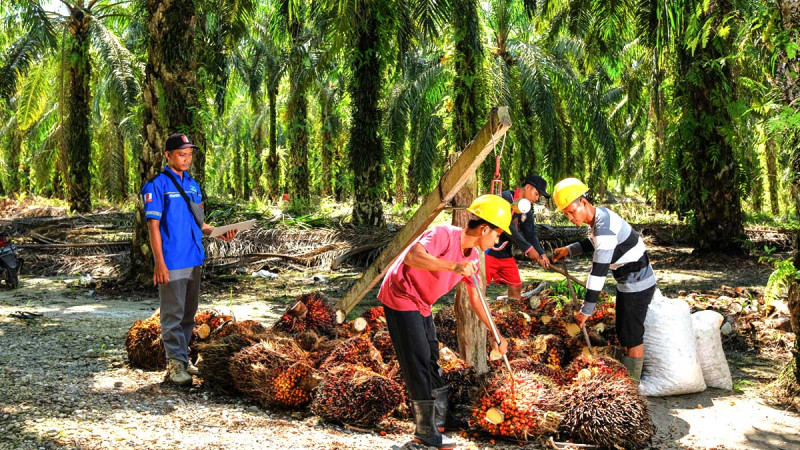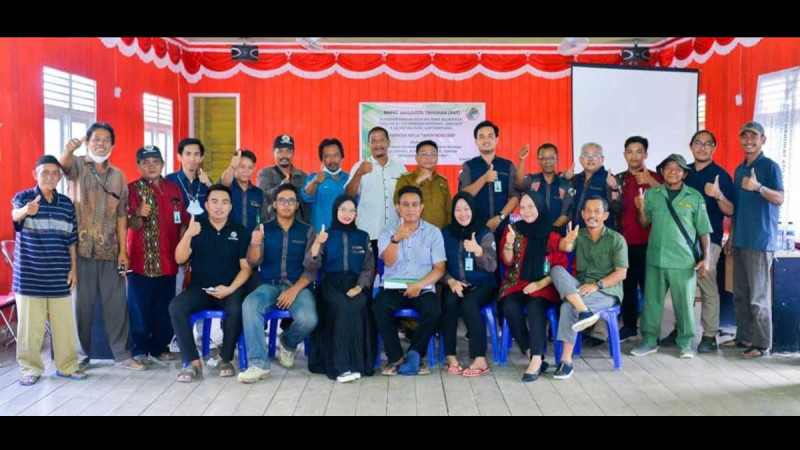
InfoSAWIT, YOGYAKARTA — For 120 students receiving scholarships in Palm Oil Human Resources (SDM PKS) at INSTIPER Yogyakarta, college is no longer just about sitting in classrooms. From May to June 2025, they have been actively engaged in hands-on training in the fields and laboratories, designed to simulate real palm oil industry conditions.
This initiative serves not only as an academic requirement but also as a demonstration that higher education can produce job-ready human resources who understand the palm oil industry comprehensively—from cultivation techniques and farm mechanization to downstream products like biodiesel, soap, and margarine.
The practical training involves four study programs: Agrotechnology, Agribusiness, Agricultural Engineering, and Agricultural Product Technology. The learning process takes place at two locations: the INSTIPER Yogyakarta campus and the SEAT KP2 Bawen plantation in Ungaran. Students are divided into waves according to their study programs, accompanied by lecturers and technicians acting as direct mentors.
Dr. Maria Ulfah, Vice Rector I for Academic Affairs at INSTIPER, explained that the practical training is designed to sharpen students' logical thinking skills: analyzing problems, formulating solutions based on data, and making decisions in the field.
“This is not just about applying theory, but how students learn to understand the complexities of the industry from upstream to downstream,” she stated in an official statement received by InfoSAWIT on Saturday (June 21, 2025).
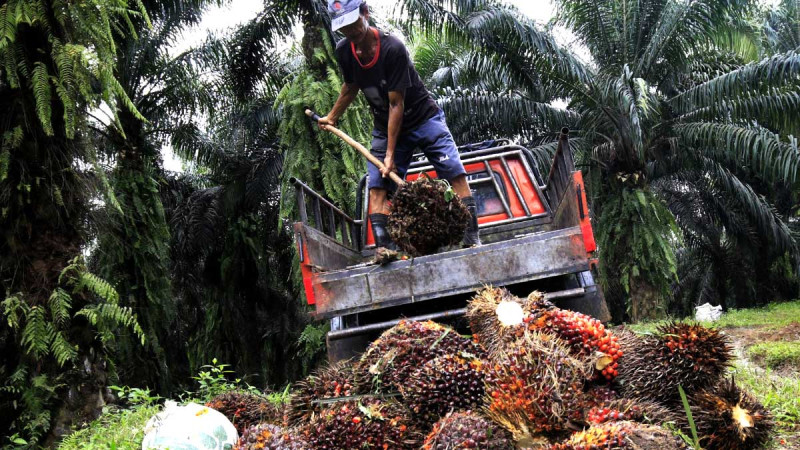
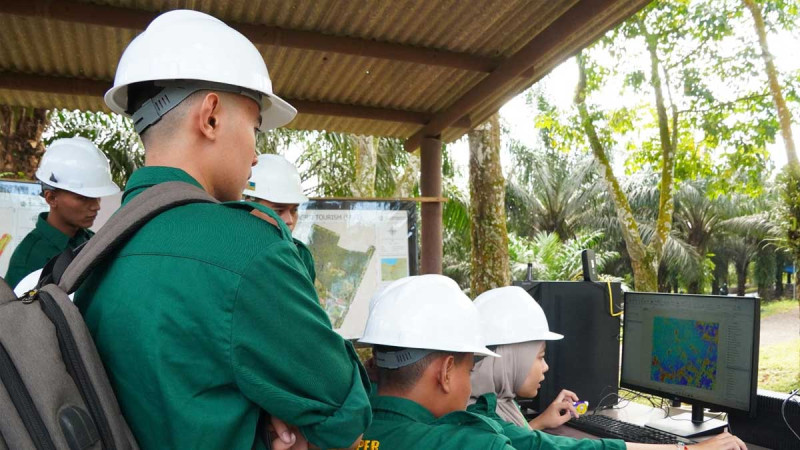
In the upstream segment, students are involved in managing palm oil plantations from land preparation, seedling, maintenance, to harvesting. Moreover, the utilization of modern technology is also a crucial part of this training. Students are introduced to the use of drones for data acquisition, design mapping, and plant health analysis using NDVI (Normalized Difference Vegetation Index) methods.
Betti Yuniasih, M.Sc., a lecturer in mapping, noted that the integration of drone technology in learning helps students understand spatial data-based monitoring systems for plantations. The results of multispectral images, she said, can detect indications of disturbances such as pest attacks or diseases.
“Students are not only observing the plantation conditions with the naked eye but also interpreting vegetation data as a basis for decision-making in plantation management,” Betti explained.
Coordination from the Agricultural Engineering Study Program introduces students to mechanical tools such as spreaders for fertilization, crane grabbers for harvesting, and drone sprayers for pesticide application. This step aims to prepare students for the modernization era in plantations, where efficiency and precision are key.
Through the introduction of these mechanization tools, students learn firsthand how technology enhances work productivity while also understanding the maintenance and operational aspects.
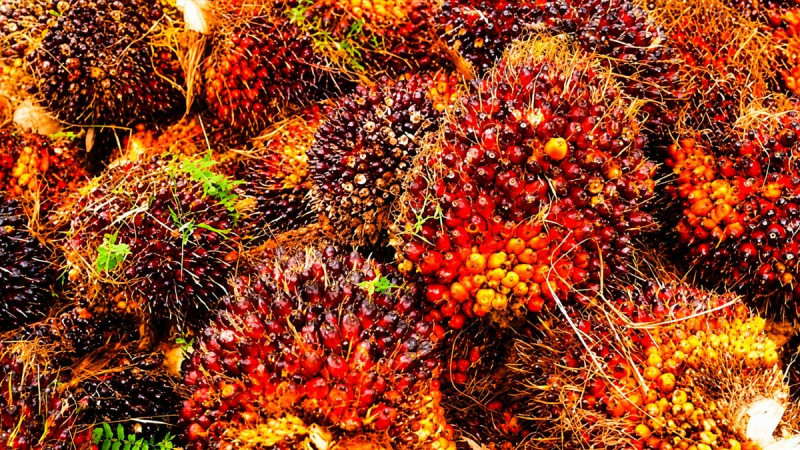
An exciting part of the practical training occurs at the INSTIPER pilot plant unit. Here, students are trained to process fresh fruit bunches (TBS) into crude palm oil (CPO), which is then further processed into downstream products such as RBDPO, biodiesel, soap, candles, cookies, and margarine.
The Agricultural Product Technology Study Program plays a key role in this phase. Students not only learn about processing but also quality management, process efficiency, and waste utilization.
Betti Yuniasih added that the design of the practical training activities is intentionally made to resemble real industry conditions so that students have a concrete vision of their future jobs.
“We aim to bridge the gap between theory in the classroom and practice in the field. INSTIPER students must be ready to enter the industry without hesitation,” she stated.
Moreover, students are also taught aspects of plantation management, including administration, budgeting, and regional potential analysis—essential skills for those who will hold managerial positions in the industry.
This practical training exemplifies the synergy among study programs at INSTIPER, promoting a cross-disciplinary approach to produce professionals in the plantation sector. In the context of a strategic industry like palm oil, higher education plays a vital role in producing human resources that are not only skilled but also adaptive to technological and sustainability challenges. (T2)