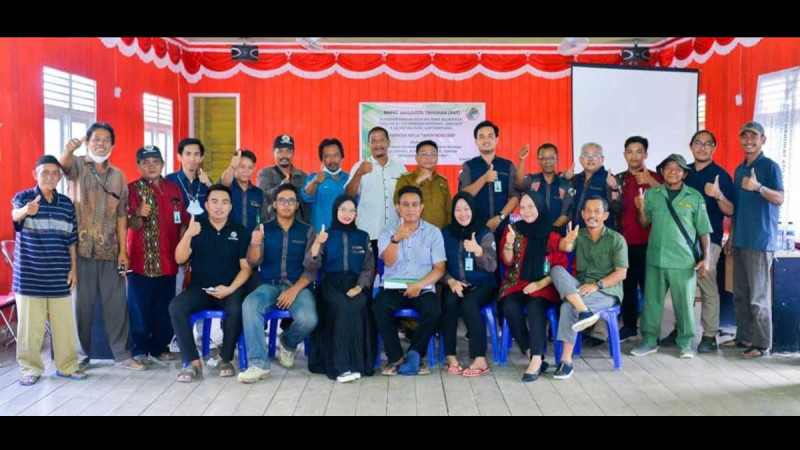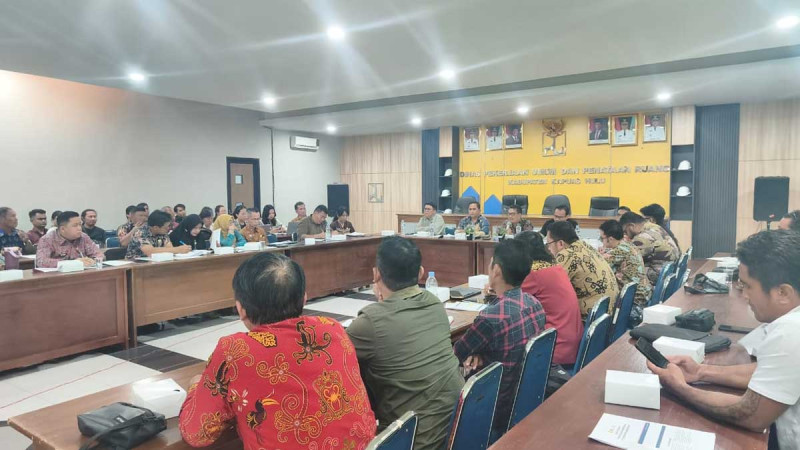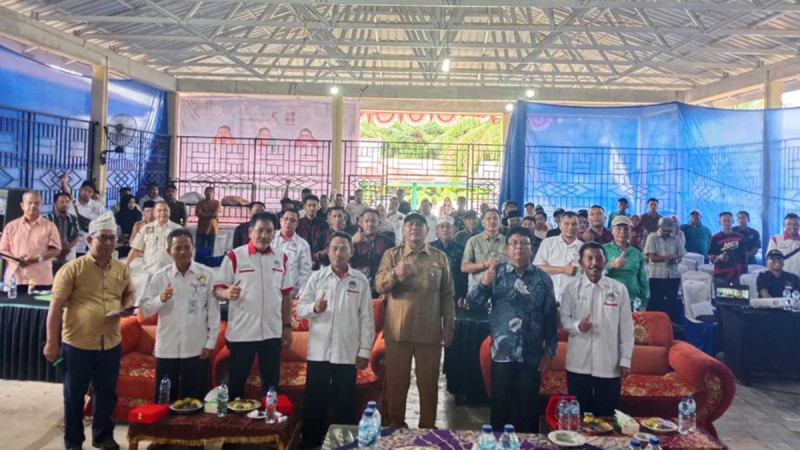
InfoSAWIT, ROKAN HULU – Amid rising fertilizer prices and sustainability challenges in the plantation sector, a group of palm oil farmers in Rokan Hulu, Riau, is turning to what has long been considered waste: empty fruit bunches (EFB). Through a biochar production training held in Bono Tapung Village, Tandun District, on Tuesday, June 17, 2025, farmers discovered a new way to manage their plantations while opening economic opportunities based on waste.
This initiative, led by the Association of Smallholder Palm Oil Farmers (Aspekpir) and fully supported by the Palm Oil Plantation Fund Management Agency (BPDP), saw over 100 farmers from five villages—Bono Tapung, Dayo, Kumain, Tapung Jaya, and Boncah Kusuma—participate in hands-on training to transform EFB into biochar, a soil amendment that can also be used as organic fertilizer.
According to Setiyono from Aspekpir, this training is not just a knowledge transfer event but also an effort to build a grassroots economy based on waste. "Biochar can become a marketable product for SMEs (Small and Medium Enterprises). Farmers not only save on fertilizer costs but can also sell biochar to fellow farmers," he stated during his speech at the Bono Tapung Village Office.
This training is a continuation of a similar program previously held in Kampar Regency. Rokan Hulu is one of only three regencies in Riau selected for this training, indicating the high potential and commitment of the region to promote agricultural innovation.
Bono Tapung Village Head, Riyanto, welcomed this initiative, noting that such training provides real solutions for farmers increasingly burdened by high chemical fertilizer prices. "With biochar, we can have organic fertilizer from waste that was previously unused. This is a great help for farmers," he said in an official statement received by InfoSAWIT on Thursday, June 19, 2025.
EFB, which has typically been piled up at factories or discarded, is actually a potential resource. In Rokan Hulu, there are 49 palm oil mills (PKS) that produce large quantities of EFB daily. If managed properly, this solid waste can become a primary ingredient for organic fertilizer and a more sustainable palm oil waste management solution.
The Head of the Rokan Hulu Agriculture and Plantation Office, CH Agung Nugroho, emphasized that Aspekpir's initiative is an important breakthrough in supporting sustainable palm oil. "This activity enhances farmers' knowledge and capacity. Biochar is easy to produce because the raw materials are abundant. We encourage training like this to reach other villages," he stated.
Similarly, the Head of the SME Division at BPDP, Helmi Muhansah, who attended virtually, expressed hope that this training would not only remain a practice but would be genuinely applied in farmers' fields and even lead to market-ready products. "If farmers can produce biochar on a small business scale, it will be a significant leap in local economic empowerment," he said.
Aspekpir's efforts align with the central government's policy direction, which is currently intensifying upstream capacity building in the palm oil sector. According to Helmi, focusing on the upstream sector is crucial to maintaining the supply of fresh fruit bunches (FFB) and supporting the downstream palm oil industry.
"Upstream capacity building is currently a government priority because the productivity of smallholder plantations must continue to improve. If not, the downstream palm oil industry will also be affected," he stressed.
Through biochar production training, farmers in Rokan Hulu demonstrate that innovation does not have to come from high technology or large investments. By utilizing local potential—such as EFB—and with support from agencies like BPDP and farmer organizations, the path to sustainable palm oil can begin at the village level.
This initiative also paves the way for the development of micro-enterprises based on agriculture while raising awareness of the importance of environmentally friendly waste management.
For Riyanto and the residents of Bono Tapung Village, this training is not just a technology transfer but a seed of change. "We want the community to not only understand how to make biochar but also to incorporate it into a wiser and more independent farming lifestyle," he concluded. (T2)