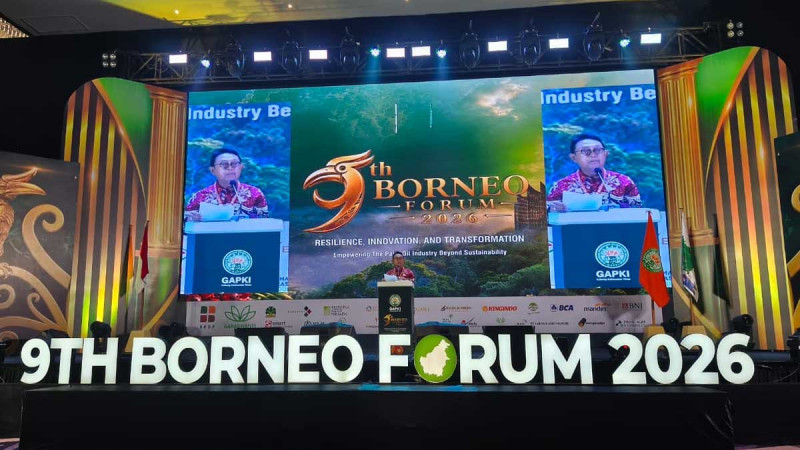
InfoSAWIT, BALI – Anak Agung Ketut Aryawan from the SMART Research Institute (SMARTRI) presented his ideas on ecosystem restoration in smallholder palm oil plantations. Amid the often overwhelming focus on large-scale plantations, he posed a fundamental question: can the same sustainability approaches be applied to smallholdings?
One of the main challenges faced by smallholder palm oil plantations is limited environmental management. Aryawan compared soil conditions in three different locations—forest, large plantations, and smallholdings. The results indicated that soil quality in smallholdings is lower than in the other two locations, suggesting that soil management practices in smallholdings need improvement to support long-term sustainability.
In his presentation, Aryawan proposed an ecosystem restoration concept divided into three main zones. The first zone is a reference area aimed at preserving natural biodiversity. The second zone is a transition area where more environmentally friendly agricultural systems begin to be implemented. Meanwhile, the third zone is a commercial area that continues to support economic production but with a more sustainable approach.
Furthermore, he emphasized the importance of a science-based approach to enhance the ecosystem functions of smallholder palm oil plantations. By applying the right restoration concepts, the negative impacts of land use can be mitigated without sacrificing economic productivity.
Moreover, this concept underscores the importance of involving small farmers in the selection of companion plants suitable for their land conditions. This way, they not only gain economic benefits but also contribute to maintaining environmental balance.
In conclusion, Aryawan called on all parties to work together to promote ecosystem restoration in smallholder palm oil plantations. "Let us do this together for a better future," he urged.
With a more planned and science-based approach, smallholder palm oil plantations have a significant opportunity to become more productive and sustainable, without neglecting the crucial environmental aspects necessary for ecosystem continuity. (T2)