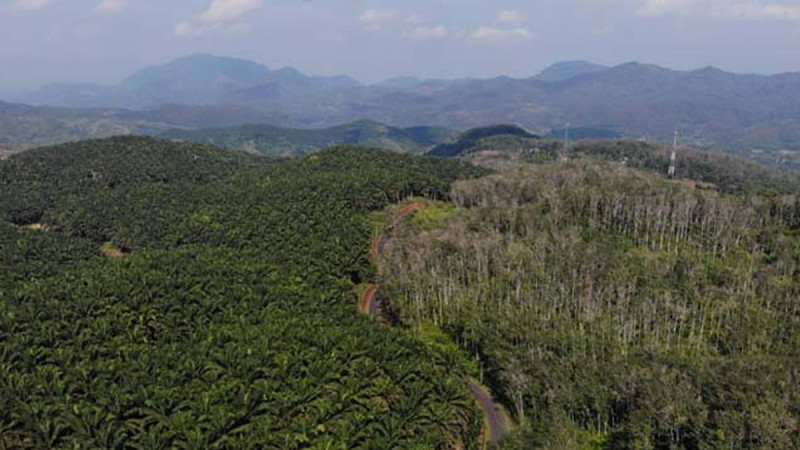
InfoSAWIT, JAKARTA – The effort to reorganize palm oil plantations within forest areas is not a new initiative. It began during President Susilo Bambang Yudhoyono's era with a moratorium policy aimed at temporarily halting the expansion of palm oil plantations while mapping forest areas. Unfortunately, under President Joko Widodo's second term, this policy seemed to fade from public attention.
However, the spirit of improving governance remains strong. The government has shifted its approach to data collection and alignment, a task led by the Palm Oil Task Force under the command of Luhut Binsar Pandjaitan. This data alignment is mandated by Presidential Decree No. 9 of 2023 regarding the establishment of a Task Force for Improving Palm Oil Industry Governance and Optimizing State Revenue.
Regrettably, by the end of President Jokowi's term, it remains unclear whether this process has been completed or if there are still outstanding tasks. Under President Prabowo Subianto's administration, the issue of palm oil within forest areas has resurfaced, this time with a more assertive approach.
Through Presidential Regulation No. 5 of 2025, the government has established the Forest Area Order Task Force (PKH). Unlike previous efforts, this task force is taking direct action on the ground. So far, approximately 438,858.25 hectares of palm oil land have been taken over and handed over to PT Agrinas Palma Nusantara, a state-owned enterprise assigned to manage the land. Reports indicate that an additional 186,268.40 hectares will be transferred in the second phase.
This decisive action has raised concerns. Not only do companies feel a loss of legal certainty, but palm oil farmers are also anxious—many of whom hold official land certificates from the government.
What will be the future of the PKH Task Force, which is now collaborating with the military to sort and regulate lands deemed illegal and located within forest areas? This issue will be discussed in depth in the Focus section of the May 2025 edition.
Equally important, we will also highlight the conditions of palm oil workers amid the intensified enforcement operations. If we consider that one hectare employs one worker, then from the 3 million hectares at risk of revocation, around 3 million workers could potentially lose their jobs. Imagine, 9 million tons of CPO—or nearly 20% of national production—could vanish. The impact would not only affect exports and FFB prices but also the livelihoods of millions.
Fortunately, several parties are taking action. GAPKI, along with 10 labor federations, including Sarbumusi, is working to build a bipartite platform to strengthen protection and compliance in the palm oil sector. The ILO has even welcomed this initiative as a good practice in social dialogue within this complex industry. This issue will be explored in the May 2025 edition of the Teropong section. (T2)
Read the May 2025 edition of InfoSAWIT Magazine for more insights.