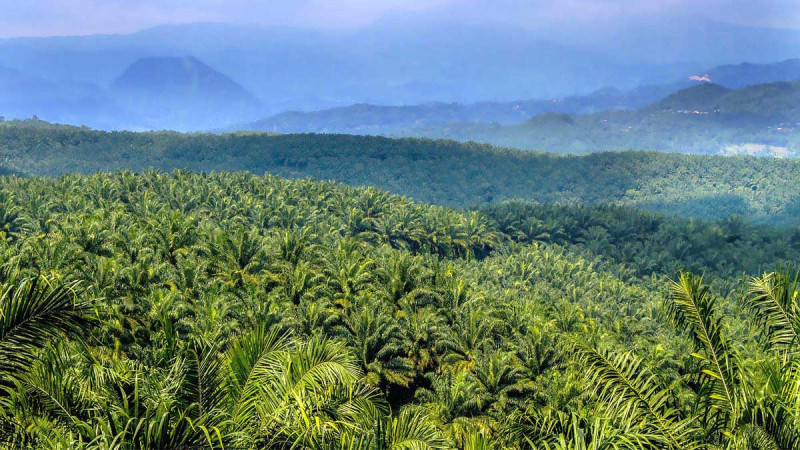
InfoSAWIT, WEST SUMATERA — Minister of Environment and Head of the Environmental Control Agency (BPLH), Hanif Faisol Nurrofiq, gave high appreciation to PT Perkebunan Nusantara IV (PTPN IV) for the company's concrete steps in implementing environmentally friendly technology in the palm oil industry sector.
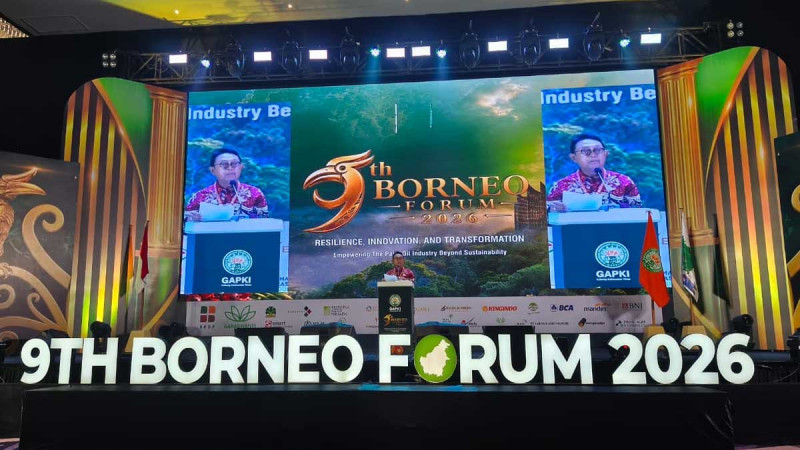
The praise was delivered by Minister Hanif during a working visit to prepare for land fires with the Indonesian Palm Oil Entrepreneurs Association (GAPKI) in the Riau and West Sumatra regions. In his remarks, he emphasized that the plantation sector is directly facing three global environmental threats: climate change, pollution from waste, and loss of biodiversity.
"Plantations that are managed carelessly can be a major contributor to environmental pollution. However, if managed with appropriate technology, this sector can actually be part of the solution, as PTPN IV has done," said Minister Hanif as reported by InfoSAWIT from the official PTPN VI website, Thursday (22/5/2025).
PTPN IV is considered successful in utilizing palm oil liquid waste (POME) as a renewable energy source. The company has operated three Biogas Power Plants (PLTBg) with a total capacity of 5.3 megawatts (MW). This effort not only reduces greenhouse gas emissions but also contributes to the diversification of clean energy in Indonesia.
Not stopping there, PTPN IV is also a pioneer in domestic carbon trading. The company is recorded as the first seller in the Indonesian domestic carbon market which was launched in September 2023. In early 2025, PTPN IV went further by participating in the launch of the International Carbon Market.
"Participation in the international carbon market shows that Indonesia is not only committed to reducing emissions, but is also ready to compete globally in the carbon trading ecosystem," said Minister Hanif.
In order to maintain the integrity and recognition of the national carbon market in the eyes of the world, the Ministry of Environment/BPLH has signed a Mutual Recognition Agreement (MRA) with the Gold Standard Foundation. This cooperation allows carbon certificates issued in Indonesia to be recognized internationally.
On the other hand, PTPN IV continues to strengthen its sustainability practices. The company has obtained various environmental certifications, such as Rainforest Alliance and Indonesian Sustainable Palm Oil (ISPO), which are valid in more than 65 of its factories and 118 plantations. This is in line with PTPN IV's commitment to support the national target of reducing emissions by 51% by 2030.
Other concrete steps are also being developed, such as reforestation programs and more environmentally friendly waste management.
"PTPN IV is a real example that the palm oil industry can go hand in hand with the global sustainability agenda. We hope that initiatives like this can be an inspiration for other companies," concluded Minister Hanif.
The efforts made by PTPN IV show that Indonesia's plantation sector has great potential to not only transform to be greener, but also play an active role in mitigating global climate change. (T2)