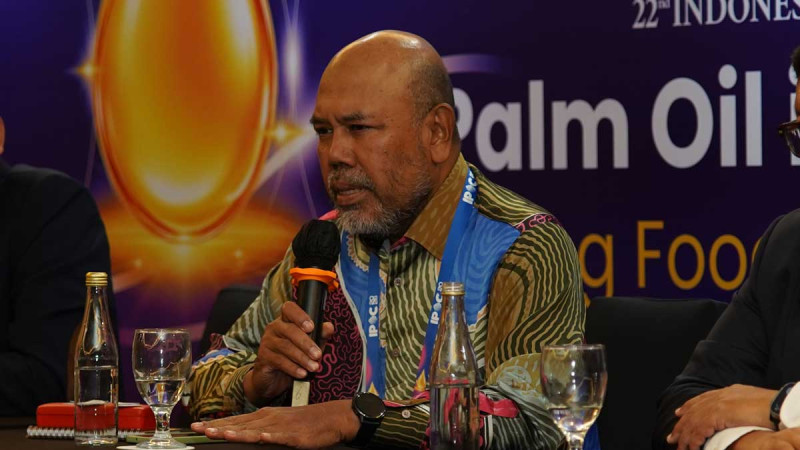
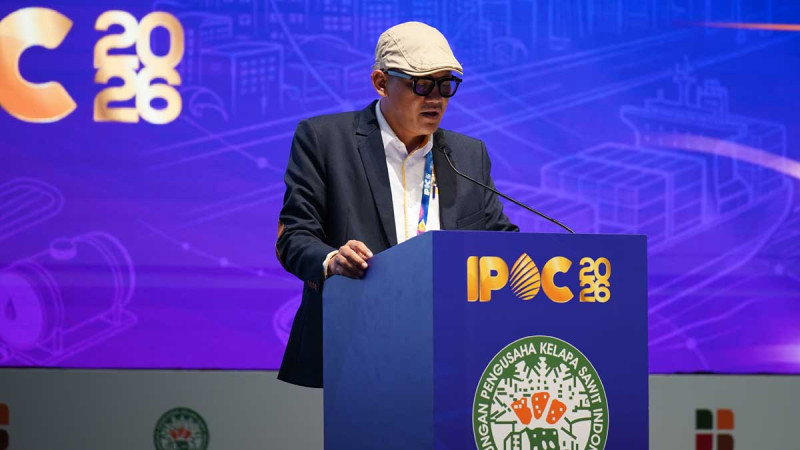
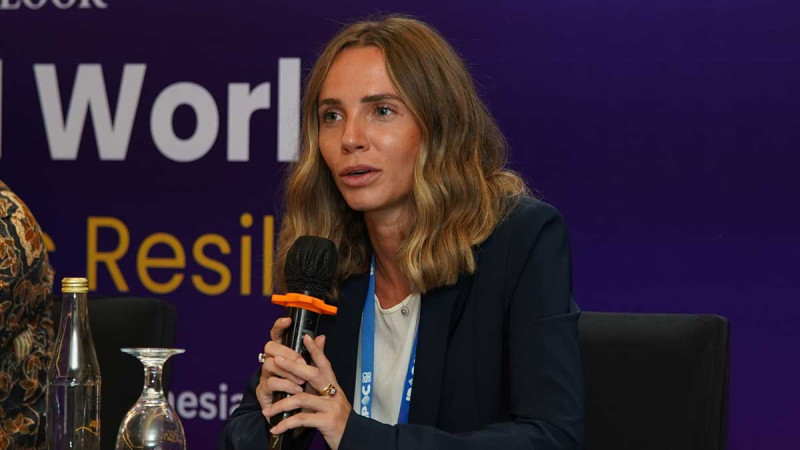
InfoSAWIT, JAKARTA – The Indonesian government has reaffirmed its commitment to promoting sustainable palm oil management as a crucial pillar of the national economy. This was conveyed by Moch Edy Yusuf, Assistant Deputy for State-Owned Enterprises in Manufacturing, Agro, Pharmacy, and Health, at the Sustainable Landscape Program Indonesia webinar.
In his remarks, Edy Yusuf emphasized that the palm oil sector has made significant contributions to the country, from creating millions of jobs to strengthening regional economies and alleviating poverty. The government continues to enhance the downstream palm oil industry as outlined in Presidential Regulation No. 12 of 2025 regarding the National Medium-Term Development Plan (RPJMN) 2025-2029.
Additionally, the government is preparing a Presidential Regulation on the National Action Plan for Sustainable Palm Oil (RAN-KSB) 2025-2029, as a continuation of Presidential Instruction No. 6 of 2019. The Indonesian Sustainable Palm Oil (ISPO) certification system is also in the process of being established to improve sustainability standards in the national palm oil industry.
However, Edy Yusuf acknowledged that the sector still faces various challenges, such as land overlap with forest areas, low ISPO certification levels among smallholder plantations, climate change impacts on productivity, and the suboptimal implementation of smallholder palm oil rejuvenation programs.
"In response to these challenges, the government is not only issuing strategic policies but also actively engaging in international cooperation," he stated, as reported by InfoSAWIT from Kalteng Pos.
One concrete form of this cooperation is through the Sustainable Landscape Program Indonesia (SLPI), a bilateral program between Indonesia and Switzerland, implemented in collaboration with UNDP Indonesia and several partners in five provinces: East Kalimantan, Central Kalimantan, West Kalimantan, Aceh, and Riau.
Since 2024, SLPI has been operational in ten districts with various activities supporting sustainable palm oil management and national food security programs. These include assisting local governments in formulating sustainable palm oil action plans, helping farmers obtain ISPO and RSPO certifications, strengthening local economies through food crop cultivation, and developing Participatory Better Land Use Planning (PLUP) at the village level.
"The preparation of PLUP is an innovative step to support sustainable and participatory landscape governance," Edy Yusuf concluded. (T2)