InfoSAWIT, JAKARTA – The crude palm oil (CPO) price which keeps decreasing makes many issues for the industries nationally. The cheap CPO makes sustainable issues to the process that the plantations needs nationally. That is why it needs strategy to prevent the cheap price in the future nationally.
It really makes a mass to the sustainable process that is actively running for it makes the fresh fruit bunch (FFB) price cheap too that the smallholders produced, and the lateness to pay the FFB that the factories bought.
The uncertain markets as the CPO buyers also make chaos to this business recently because the CPO products which are export oriented should be blocked by the new regulations which are difficult to sell CPO in the export countries. As the result, the absorption does not run well but makes much cheaper. For the description, the CPO selling price is the same with it in 1973.
The dependence of CPO Indonesia to the export markets has become the frightening one for the industries nationally for years. The needs to the domestic absorption do not give much hope though there are breakthroughs to use it.
On the other hand, the CPO premium markets do not give the certain absorption too. It is needed to increase the demand in the global markets. The balance of supply and demand becomes the part of need in the palm oil industries and the future business nationally.
To maintain the CPO market in the global, Palm oil Plantation Fund Management Ageency (PFMA) agreed not to run Crude palm oil Supporting Fund (CSF) until the end of this year, 2019.
This is to maintain the CPO market in the global which the smallholders get the effect indirectly and nationally. In addition, the global CPO price would be in fluctuation. The CSF would run if there is certainty that it would be increasing.
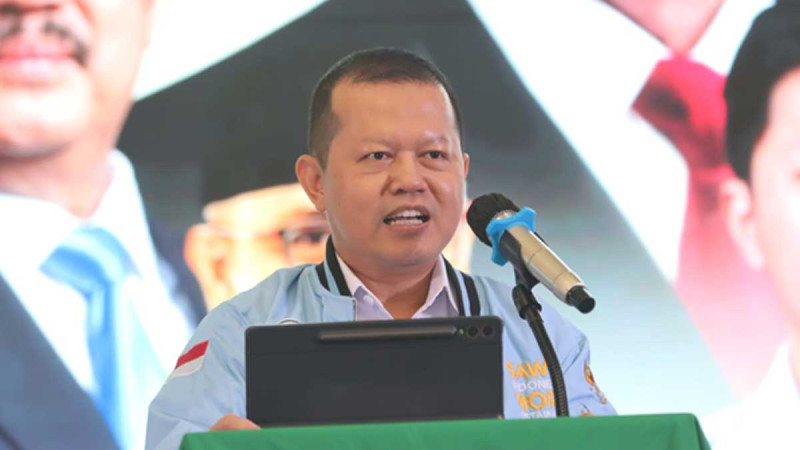
Director of PFMA, Herdrajat Natawijaya said that his side has reported it to the President. “We believed that when CSF is 50% to take, the CPO would be cheaper. It means that the smallholders or the palm oil producers would get much cheaper,” he said in the Focus Group Discussion (FGD) Minyak Sawit Berkelanjutan: Diskusi Sawit Bagi Negeri Vol. 4 within the theme “Petani Butuh Keberlanjutan Harga CPO Naik” Thursday (26/9/2019) in Jakarta where InfoSAWIT did.
Big possibility is that the best time to run CSF is when the biodiesel mixture 30% to diesel (B30) program effective runs on 1 January 2020. At the time, there would be CPO to use because the volume would be increasing about 3 million tons compared to the volume in B20.
Guntur Cahyo Prabowo of Roundtable on Sustainable Palm Oil (RSPO) told that his side tries to synergize sustainable palm oil practice development between the stakeholders and the smallholders. This is about to help the smallholders to cut off the trade chain supply of fresh fruit bunch (FFB) and the buying price to the smallholders would not be from the third sides for there would be discount.
So by implementing the sustainable scheme, the smallholders would have a chance to get information access and direct selling to the factories. Though the sustainable certification would not be the one to solve the issue but it could be one alternative to open access to the smallholders, namely the access to process the certified FFB that the smallholders produced. “Besides the market access, the chance to increase the capacity in the factories and other sides, such as, government would widely open,” he said.
Until now, there are about 30 independent smallholders’ groups getting RSPO certificate. But if compared to the width that they cultivate in Indonesia, this is not too good. It is important to accelerate the implementation of sustainable palm oil standards.
For information, until now 20% of the total palm oil supply in the world have got RSPO certificate. 55% of the numbers are from Indonesia. The plasma and independent smallholders certified by RSPO reach 0,15% of the total sustainable palm oil. There are 3.371 independent smallholders and about 117.673 plasma ones.
He also mentioned that the slow acceptance of sustainable palm oil that the smallholders produce may be about the cost to fulfill the process. “It needs the third side to run it,” Guntur said.
For information, the Certified Sustainable Palm Oil (CSPO) products from Indonesia per June 2019 reached 7.819.243 tons. The numbers derived from 195 certified factories and did not count the independent ones. The certified CPO volume in Indonesi per June 2019 increased compared to the numbers per June 2018 that reached 6.372.147 tons.
General Secretary of Serikat Petani Kelapa Sawit (SPKS), Mansuetus Darto told that the government still ignores to develop the smallholders plantations though they are in big numbers.
He admitted that until now the policies published by the government are not maximal yet to develop the independent ones, such as, the President Instruction No. 8 / 2018.
In the President’s Instruction, the President urged to evaluate the palm oil plantation licenses for the corporates, map the smallholders’ plantations, increase the human resources, revitalize the smallholders’ institutions, and 20% allocation from the forest regions.
This does not run well and the smallholders do not get advantage ever since it was published. As the effect, they still have small in number of productivity, hard to get access of fertilizers, bad infrastructures, and most of them sell their products to the middlemen within cheap price.
“Besides, the fresh fruit bunch (FFB) produced by the smallholders is determined by the markets and there is no model of protection to their price because of the market situation as it should be regulated in the Laws No. 19 / 2013 about the Protection and the Empowerment of the Smallholders,” he said
Head of Secretariat of Indonesian Sustainable Palm Oil (ISPO), Azis Hidayat said that the implementation of ISPO scheme to the planters, both the government, the stakeholders, and the smallholders increased.
This, as matter of fact, would influence the image of palm oil from Indonesia in the global markets indirectly and would influence to make better price. The ISPO implementation is the mandatory scheme that every stakeholder should obey in Indonesia, including the smallholders.
By August 2019, the published ISPO certificate reached 566 (556 for the companies, 6 for the independent unions, and 4 Plasma KUD) within the total plantations reaching 5.185.544 hectares (Ha), the productive plantations reaching 2,961.293 Ha, the total production of FFB reaching 56.650.844 tons/year, and CPO 12.260.641 tons/year. The productivity reached 19,07 tons/Ha and the yield reached 21,70 % in average.
The published ISPO consisted of 508 certificates to private companies within the width reaching 4.896.546 Ha (63% Ha of the total areas reaching 7,788 million Ha); PTP Nusantara got 48 certificates within the areas reaching 282.762 Ha (40 % of the total width reaching 713 thousand Ha); and plasma – independent unions got 10 certificates reaching 6.236 Ha (0,107 % of the total width that reached 5,807 million Ha). (T2)
About Diskusi Sawit Bagi Negeri:
Diskusi Sawit Bagi Negeri is an interactive discussion among the stakeholders nationally that presents the speakers from many backgrounds to give the whole description about palm oil. The goal is to give the right understanding about its existence and contribution to the country, social, and environment.
Diskusi Sawit Bagi Negeri is supported by PFMA, RSPO, and SPKS within the strategic media partner, Media InfoSAWIT and Palm Oil Magazine. The stakeholders, such as, the government, businessmen, researchers, organizations, social and environmental activists, and others are about to develop palm oil in Indonesia.
If you need more information, please contact us, Ignatius Ery Kurniawan by Handphone WA : 081284832789; e-mail: sawit.magazine@gmail.com