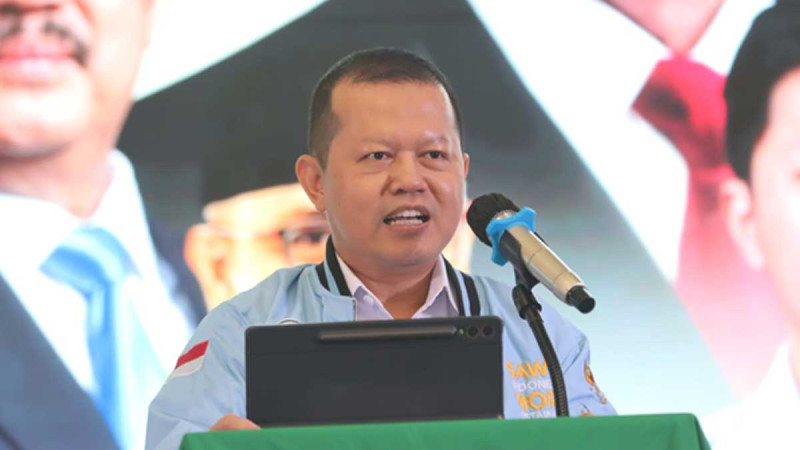
InfoSAWIT, JAKARTA - Deputy II of Chief of President’s Staff in Study and Prior Program Management, Yanuar Nugroho said that from its witdth, palm oil plantations laid about 14 million hectares (ha) (The statistic in 2018) by involving 6,37 million workers and produced 37,8 million tons of palm oil.
Palm oil plantations are cultivated by three major groups, they are, the private (stakeholders) reaching 55% of the total plantations, the second is the smallholders reaching 40% and the third is the government reaching 5%.
He also said that the smallholders play important position for cultivating 40% of the total areas. There are challenges to face namely from the independent smallholders about the small productivity.
Besides the challenges about the smallholders, he continued, the others are about the environment issue, such as, the assumption about deforestation, forest degradation; the social conflict issue, the replanting program, the economic gap, and the fire. “We should face the challenges,” he said in the speech representing the Chief of President’s Staff, Jend. Purn. Moeldoko in the Rembug Nasional Petani Kelapa Sawit Indonesia: Bergotong Royong untuk Moratorium Sawit, “Apa yang Perlu Dibenahi danDilakukan dari Sawit Indonesia untuk Petani” in Jakarta where InfoSAWIT, did attend.
For there are challenges to develop palm oil plantations, in the future, it should not be cultivated as Busisness as Usual (BAU). It needs solution. He also said that according to leads from President Joko Widodo, it needs to focus to increase the productivity and develop the downstream. (T2)
For more, please read InfoSAWIT, December 2018