InfoSAWIT, JAKARTA –As the biggest palm oil producer in the world, Indonesia has its strategic role to supply the global needs. In the same time, Indonesia has the biggest sustainable palm oil plantations based on the sustainable principles and criteria universally.
In 2018, Indoneisa may produce about 42 million tons of crude palm oil (CPO). While the certified sustainable crude palm oil (CSPO) in the world may have been 12,43 million tons. 52% of the production derive from Indonesia or about 6,5 million tons, yet from the Indonesian Sustainable Palm Oil (ISPO) and International Sustainability and Carbon Certification (ISCC).
For information, ISPO is the mandatory certification that the government of Indonesia obliges to the planters including the smallholders. While RSPO and ISCC are voluntarily done.
For having big role in the international trade, palm oil productions from Indonesia are always noticed and accused negatively. So it needs the same strategy to manage the production nationally to supply the market sustainably.
According to Director of Palm oil Palm Oil Plantation Fund Management Agency (PFMA), Herdrajat Natawijaya, as an agency made by the government, PFMA has important role to support palm oil industries. One thing to do is by increasing the production from the smallholders’ plantations within the fund supports to do replanting program.
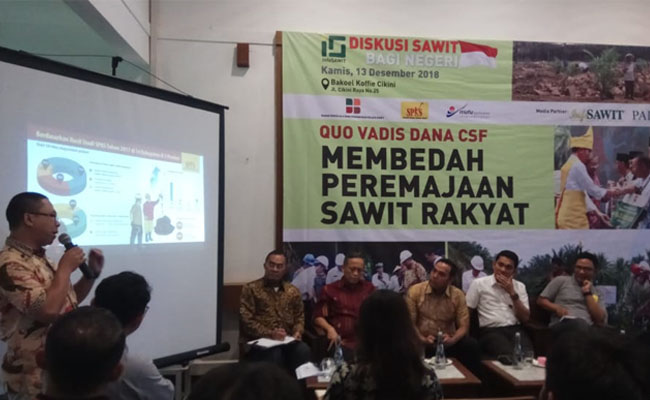
“The smallholders have important role to develop palm oil plantation nationally. They have about 42% of the total plantations nationally,” he said in the Palm Oil Discussion within the theme, “Quo Vadis Dana CPO Supporting Fund: Membedah Peremajaan Sawit Rakyat” in Cikini, Jakarta that InfoSAWIT run.
The government has supported the domestic to increase the palm oil consumption by running biodiesel mandatory program. In phase, its consumption always increases within the B20 program nationally.
Meanwhile General Secretary of Serikat Petani Kelapa Sawit (SPKS), Mansuetos Darto hoped, the replanting program could be the way to improve the welfare of the smallholders by increasing the cultivation practices and market access.
He thought, the smallholders should get supports from many sides. “They really need the supports from many sides, namely the government, and the plantation companies. They should get increasing capacity and market access to sell their harvest,” Darto said.
It is important to be in synergy among the stakeholders for it would be the same successful key for all to develop palm oil plantations in Indonesia to supply the world vegetable oil needs. The same goal should be got together too, that is, sustainable development goals. (T2)