InfoSAWIT, PEKANBARU – The Government of Riau Province has begun restructuring the management of its palm oil Revenue-Sharing Fund (DBH), particularly in infrastructure spending, amid regulatory changes and mounting regional fiscal pressures.
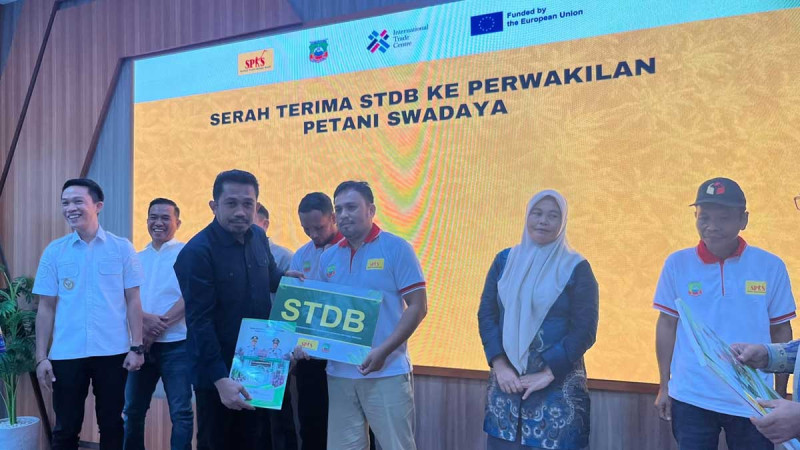
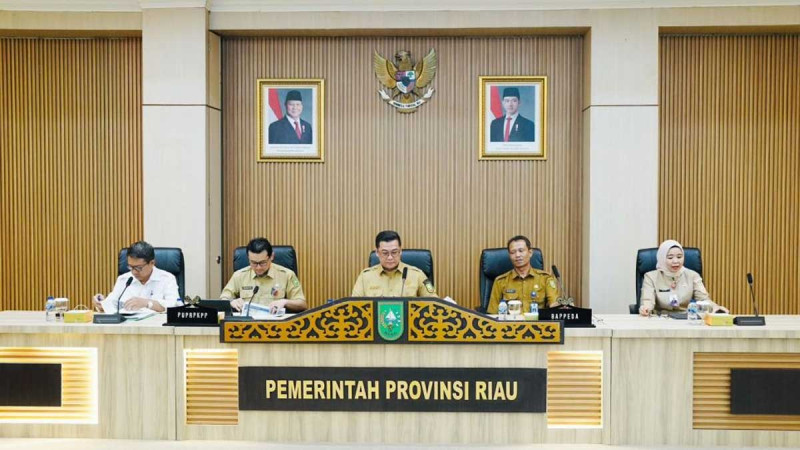
As reported by InfoSAWIT from Media Center Riau on Sunday (April 26, 2026), the matter was discussed during a Palm Oil DBH Coordination Meeting held at Melati Hall and chaired by Riau Provincial Secretary Syahrial Abdi.
During the forum, Syahrial stressed the importance of a shared understanding regarding policy changes, especially following the introduction of new regulations governing palm oil DBH distribution schemes.
He noted that while there is no dispute over the revenue-sharing formula itself, the actual amount received by the province has shown a declining trend, requiring a more adaptive management strategy.
“This discussion is necessary because, fundamentally, there are new regulatory changes. We are not debating the revenue-sharing formula—the clear reality is that the amount is gradually declining,” he said.
This situation, he added, is compounded by fiscal challenges that demand more efficient and targeted use of public funds. Every budget allocation must now generate maximum development impact.
The coordination meeting also highlighted the need to adjust regional work plans in line with the latest Ministry of Finance regulation. Verification of regional needs must now be aligned with the size of DBH allocations received and actual field conditions.
The regulatory shift—from Finance Ministry Regulation No. 91/2023 to No. 10/2026—has become the main basis for policy adjustments.
One significant change is that regions may now qualify simultaneously as producing regions and border regions, whereas previously they could only receive one category of allocation.
Under the new rules, fund distribution is expected to become more proportional and better reflect geographic realities as well as each region’s contribution to the palm oil sector.
Additionally, palm oil DBH is no longer entirely dedicated to infrastructure development. At least 15 percent of the fund may now be allocated for other needs, in accordance with government flexibility mechanisms.
However, these changes also come with stricter administrative requirements. Regional governments are expected to be more accountable in both planning and reporting the use of funds.
Syahrial emphasized that the coordination meeting forms part of a broader evaluation of palm oil DBH management procedures, aimed at improving transparency and effectiveness amid evolving policy dynamics.
“This means administrative requirements will become stricter. This coordination meeting is part of evaluating those procedures,” he concluded. (T2)