InfoSAWIT.com - The government up to now has issued various policies that apparently missed their marks, for example: the allocation of smallholder palm oil replanting funds whose value is still far from being able to support the development of the national palm oil biodiesel industry.
Referring to the records of the Palm Oil Farmers Union (SPKS), the amount of funds collected by BPDP-KS during 2015-2019 was recorded at Rp 51 trillion ($3.5 billion), of which Rp 47.28 trillion came from palm oil export levies and Rp 3.7 trillion from fund management.
Referring to the BPDP-KS Fund allocation in 2019, it was recorded that the total use of funds from palm oil export levies from 2015 to 2019 amounted to Rp 33.6 trillion.
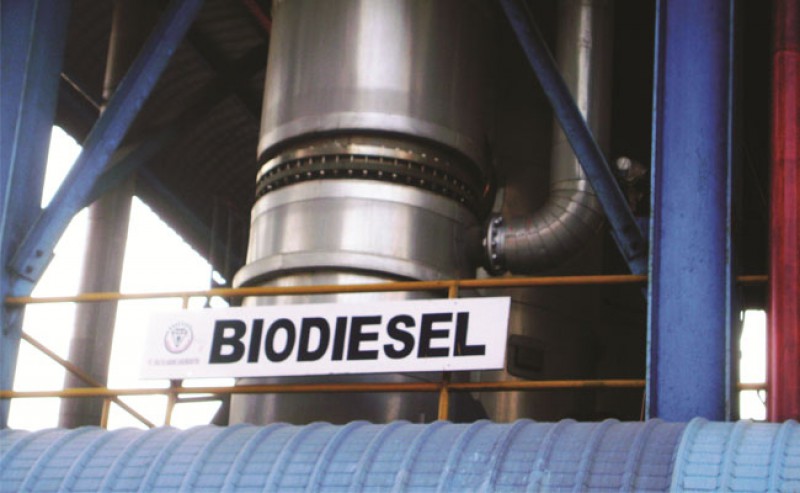
Where funds for smallholder palm oil rejuvenation only reached 8.03 percent or equivalent to Rp 2.7 trillion, incentives for palm biodiesel reached 89.86 percent with a value of Rp 30.2 trillion.
BPDP-KS programs were previously expected to be able to revive Indonesian palm oil, specifically smallholder plantations.
However, these programs have not exactly been going as planned.
Farmers apparently still face many challenges, especially regarding productivity, which involve the procurement of superior oil palm seeds, the difficulty of obtaining subsidized fertilizers, limited facilities and infrastructure and cultivation practices that need to be improved.
"Not to mention the problem of marketing palm fruit, farmer institutional problems, and regarding farmer data which is still unclear, because there are plantations in forest areas which will trigger partnership conflicts regarding legal clarity. Not to mention access to funding, human resources, as well as facilities and infrastructure," Marselinus Andry, from the Palm Oil Farmers Union said in an online discussion attended by InfoSAWIT, early March 2021.
These problems will continue to shackle farmers.
According to a survey conducted by SPKS in 2017 involving 10,000 farmers in 5 provinces, 71 percent of farmers have not joined a union, while about 18 percent of farmers have joined non-oil palm unions, around 11 percent of farmers have joined farmers' unions.
The problem of market access is also still present, because still referring to the survey, as many as 73 percent of independent oil palm farmers still sell their palm fruit to middlemen. Where about 8 percent of oil palm farmers sell their fruit to Loading Ramp and CV. Only about 2 percent of oil palm farmers sell their fruit to cooperatives and 17 percent sell their fruit directly to palm oil mills.
“In fact, selling fruit directly to the factory will be able to increase farmers' income by 20-30 percent of the current FFB price. This is because independent smallholders' FFB prices are determined by middlemen. Therefore, increasing farmers' income will make it easier for farmers to buy fertilizer and increase productivity and the lives of farmers' families," said Marselinus.
The article was first published in InfoSAWIT Magazine March 2021 Edition