InfoSAWIT, JAKARTA - Sustainable palm oil is part of human civilization which runs together with stakeholders. It is part of voluntary agreement among the stakeholders, downstream producers, traders, and also consumers in the globe.
The voluntary agreement was got by implementing sustainable principles and criteria universally by having competent third parties as auditors. Let us say universal certification, Roundtable on Sustainable Palm Oil (RSPO) which has got more than 8.000 members from multi-stakeholders in many countries.
As fuel palm oil trade, it is known as International Sustainability and Carbon Certification (ISCC) where European Union requires the certificate if biodiesel product is sold in 27 countries – the members. ISCC requires not only sustainability but also obliges to get carbon calculation to make sure that biodiesel is as environmental product.
Many sustainable palm oil producer countries commit to the same voluntary agreement. As the biggest CPO producer in the world, Indonesia also has Indonesian Sustainable Palm Oil (ISPO) mandatorily. Malaysia has Malaysian Sustainable Palm Oil (MSPO) which is mandatorily available.
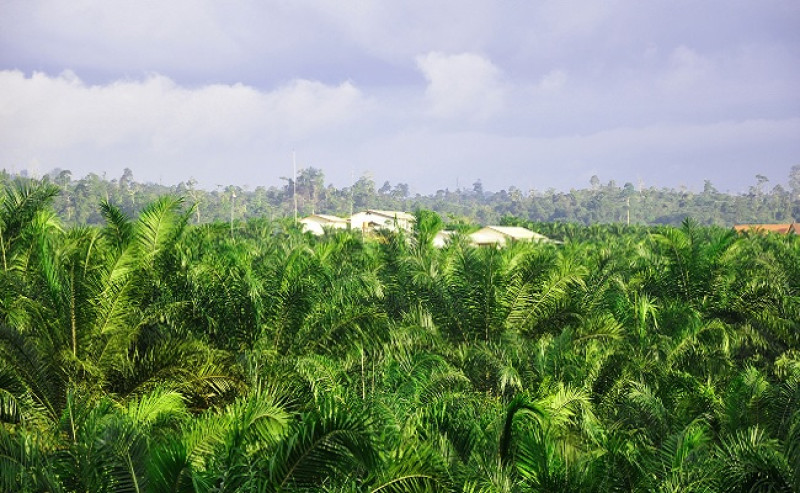
Sustainability which started from planters, keeps developing in CPO supply chain – from mills around the plantations and material suppliers which derived from fresh fruit bunch (FFB) that the independent and plasma smallholders produced.
Not only FFB suppliers, sustainable principles and criteria are available since the first time a plantation was planted. When having new planting procedure, sustainable principles and criteria should be done by stakeholders or planters.
Zero fire new planting, planting superior seeds, environmental fertilizers that are categorized in sustainable and best practices, are parts of sustainable principles and criteria that many planters have done. Though it is difficult and full of challenge, many planters successfully got ISPO, RSPO, and ISCC in Indonesia.
From what Editorials of InfoSAWIT noticed, the hardest thing that planters should face in sustainable palm oil terms and conditions, is the area legal which the Government of Indonesia should publish. Overlapping area permit, and legal permit for area use are the biggest obstacle to get sustainability certification.
Editorials of InfoSAWIT got stories from its friends that are working in palm oil companies and as smallholders, they told that it is difficult to get area legal where they cultivate. Besides being difficult to get area permit, the other issue also derives from area permit which its status can change because there is no legal certainty about provincial/city/district spatial plans.
What friends (the stakeholders and smallholders) of InfoSAWIT told, was also confirmed by other friends of InfoSAWIT in social and environment campaigners. Many non-government organizations involved in advocacy and mitigation to smallholders in many regions. They told to improve palm oil plantation legal permit nationally.
Palm Oil Plantation Legal Needs Solution
The biggest issue about palm oil legal in Indonesia, according to what Editorials of InfoSAWIT got, derived from the inharmony regulations published by central and regional governments. Area legal issue is the main factor to area, social, and environmental conflicts that keep happening until now.
The question remains, what is the solution? As the sovereign country, the Government of Indonesia should play its roles to get solution on palm oil plantation legal permits. By the authority that central to regional government has, it should be regulated by the available regulations in Indonesia. some cases might need adjustable policy from the government.
If the issue can be solved by the government, some big issues about area legal could get solution well. Palm oil plantations could develop by focusing sustainable and best practices. Besides, smallholders replanting program that was targeted to cover 180 thousand hectares per year could be running and escalating in numbers every year.
The Government of Indonesia should also prioritize smallholders. Infrastructures for smallholders’ plantations from the government and helps from many non-government organizations and their partners could be the big encouragement to improve the smallholders’ plantation issues.
On the other hand, partnership between plantation companies and smallholders is the next issue. It should be equal, transparent to prove that partnership would deliver better economy for both parties. It also needs to improve bank industries as fund supporters that oblige avails, off-taker, cooperation to get loan. This is the root of issue.
Smallholders’ Entrepreneurship
Fund mechanism from the banks could be simple. For the smallholders hey can be organized in groups or other institutions. There should be counseling and development to manage (fund help) together. The development and institutions can be with non-government organizations or plantation companies to encourage smallholders’ entrepreneurship.
It means, palm oil plantation companies should not always be avails to get fund cooperation from banks. The smallholders could do it in groups. By encouraging smallholders’ entrepreneurship Indonesia would be a developed country from its own power. Not only the urbans could develop their regions, but every village could to for they have palm oil plantations.
Smallholders’ entrepreneurship mechanism would also deliver profits for the government because it supports tax in development programs nationally. If the smallholders have the capability in entrepreneur, their bargaining position would be better and palm oil companies would be easier to develop their future business.
Sustainable palm oil is not only about production only but also encourages the same progress for planters in Indonesia. By having capability of entrepreneurship, the smallholders in many remote areas would stand on their feet, sustainably run palm oil plantation business as the form of the Same Green Commitment.
Editorial Majalah InfoSAWIT, May 2023
By: Ignatius Ery Kurniawan