InfoSAWIT, PALEMBANG – The establishment of the Indonesian Palm Oil Management Agency (BPPI) is expected to become a strategic step in improving national palm oil governance, which has long faced coordination and regulatory challenges.
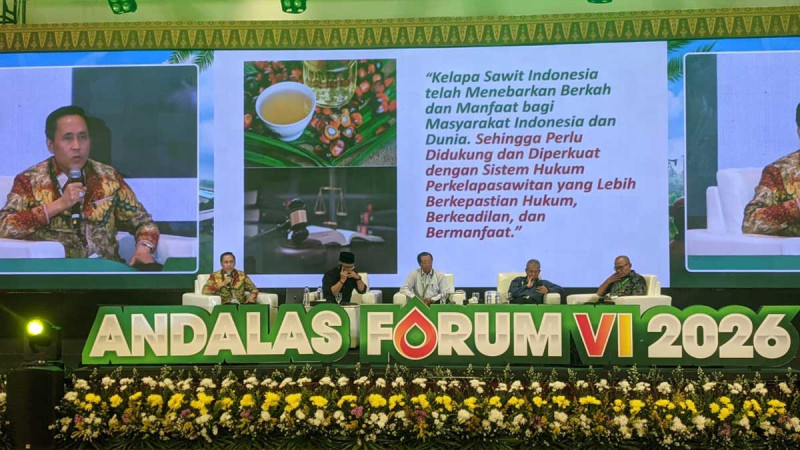
This was conveyed by Ermanto Fahamsyah, Professor of Economic Law at the University of Jember and advisor to the Indonesian Palm Oil Association (GAPKI), during the Andalas Forum VI in Palembang.
“BPPI will become a game changer that can transform national palm oil policies toward more integrated and strategic governance,” he said.
The agency is designed as a non-structural body reporting directly to the President, functioning as a centralized policymaking hub for the palm oil sector.
He explained that BPPI is expected to integrate regulation, development, and supervision from upstream to downstream, which are currently spread across multiple ministries and institutions.
The agency will also promote regulatory harmonization, strengthen smallholder protection, accelerate sustainability certification, and enhance Indonesia’s position in global trade diplomacy.
“With this strategic role, BPPI will not only serve as an administrative body but also as a systemic architect of Indonesia’s palm oil governance,” he added.
He emphasized that BPPI is not intended to add bureaucracy but to strengthen cross-sector coordination and policy synergy.
Quoted from InfoSAWIT, on Friday, April 17, 2026, that the agency is expected to improve efficiency and global competitiveness of Indonesia’s palm oil industry. (T2)