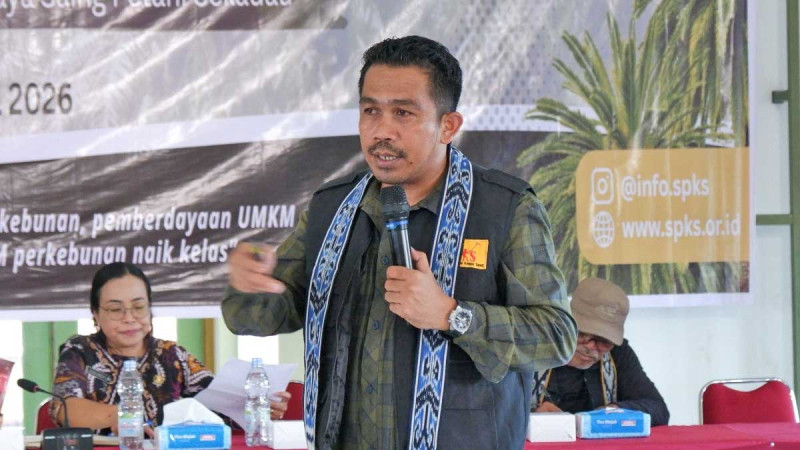
InfoSAWIT, SEKADAU – The Serikat Petani Kelapa Sawit has urged the government, particularly the Ministry of Finance, to increase the allocation of palm oil revenue-sharing funds (DBH), arguing that producing regions receive disproportionately small benefits.
Quoted by InfoSAWIT from an official statement on Thursday (April 16, 2026), SPKS Chairman Sabarudin stated that producing regions only receive a small portion of the economic value generated by the palm oil sector.
“Palm oil revenue sharing is the right of producing regions. However, the funds returned remain minimal compared to the trade value and state revenues generated from this sector,” he said.
Currently, the DBH scheme is regulated under Government Regulation No. 38/2023 and updated through Ministry of Finance Regulation No. 10/2026, sourced from export levies and duties.
However, SPKS considers the policy unfair, noting that export levies reached around US$123.7 per metric ton in 2026, while about 90% of the funds—equivalent to Rp50 trillion annually—are allocated for biodiesel subsidies.
As an illustration, Sekadau Regency only receives around Rp3 billion annually, far below the economic value generated in the region.
SPKS also highlighted data accuracy issues in DBH allocation and urged the government to use updated regional data and involve local authorities in verification processes.
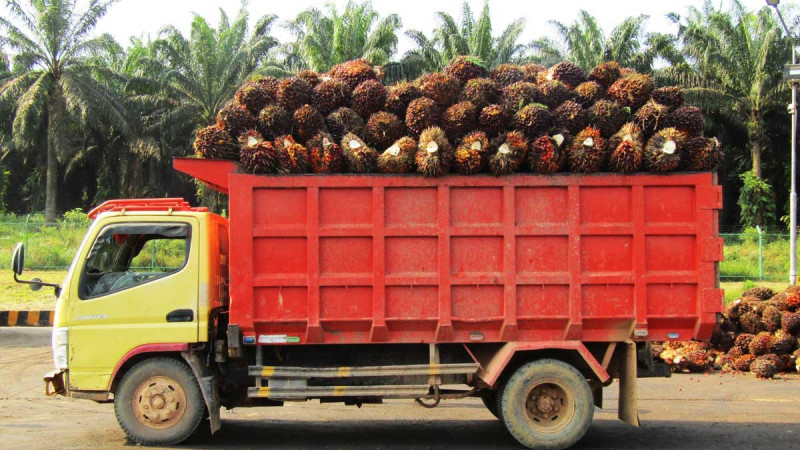
Improving DBH allocation is seen as crucial for infrastructure development, particularly plantation roads, which currently increase logistics costs for farmers.
“Better infrastructure will reduce transport costs, maintain fruit quality, and improve farmers’ income,” Sabarudin added. (T2)