InfoSAWIT, JAKARTA – There is a recurring irony in Indonesia’s palm oil bioenergy discourse. Its potential is vast, the technology is available, and in some cases already proven. Yet, in industrial reality, its development often stalls—remaining at feasibility study stages rather than becoming viable business practices.
Quoted by InfoSAWIT from an analysis by Idad S. Haq, on Friday (April 17, 2026), the issue is no longer about feasibility, but about how to make bioenergy economically viable.
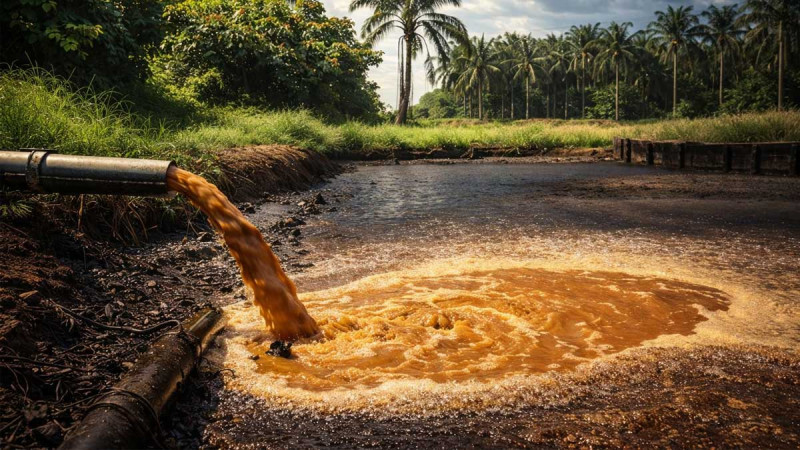
For years, discussions around palm oil bioenergy have been dominated by technical aspects—POME potential, biogas conversion efficiency, and optimal technologies. However, industrial decisions are driven more by investment value, return periods, and risk considerations.
This is where bioenergy often loses momentum. High upfront investment, limited short-term financial visibility, and its position as a non-core business component make it less prioritized—often seen as a “nice to have” rather than a “must have.”
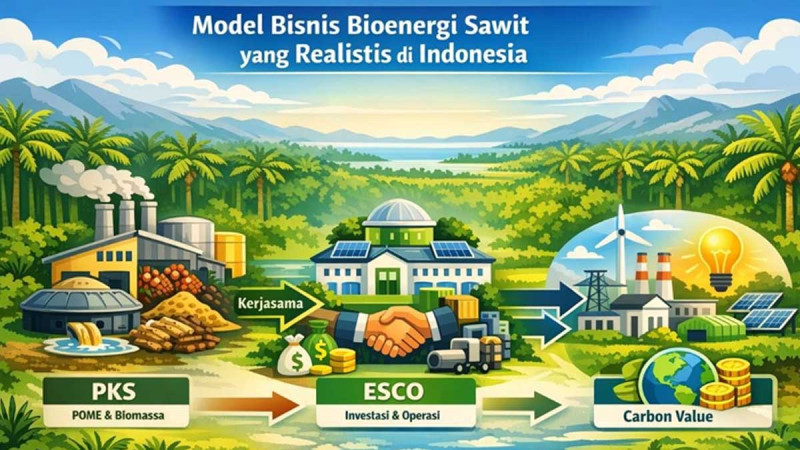
A shift in perspective is emerging through the Energy-as-a-Service model, implemented via Energy Service Companies (ESCO). This approach transfers investment burdens from palm oil mills to specialized energy investors, allowing mills to simply purchase energy rather than build facilities themselves.
Such a model transforms capital expenditure into operational costs, reduces financial risks, and enhances project attractiveness for financing institutions.
Economically, medium-scale mills can generate significant value from waste utilization through energy savings, operational efficiencies, and potential carbon credits. More importantly, value is shared between investors and mills, creating balanced partnerships.
Several pilot collaborations in Sumatra and Kalimantan indicate a shift toward this model, with third parties developing biogas facilities while mills ensure stable feedstock supply.
However, challenges remain, including contract clarity, revenue certainty, operational discipline, and policy support. Without strong regulatory frameworks and green financing access, large-scale implementation may remain limited.
Ultimately, palm oil bioenergy reflects how the industry responds to global demands for efficiency, sustainability, and environmental responsibility. The key question is no longer technological feasibility, but whether viable business models can be established. (T2)