InfoSAWIT, JAKARTA – Indonesia’s palm oil industry, long regarded as a cornerstone of the country’s export earnings, is facing growing uncertainty over land tenure rights as the government moves to tighten regulations surrounding Hak Guna Usaha (HGU), or land use rights.
Proposed policy measures, including stricter HGU issuance and the potential seizure of land deemed unproductive, have raised fundamental questions about the direction of Indonesia’s agrarian governance. While the reforms are intended to strengthen land management and prevent speculative holding, industry stakeholders warn that regulatory ambiguity could introduce new investment risks into one of the nation’s most strategic sectors.
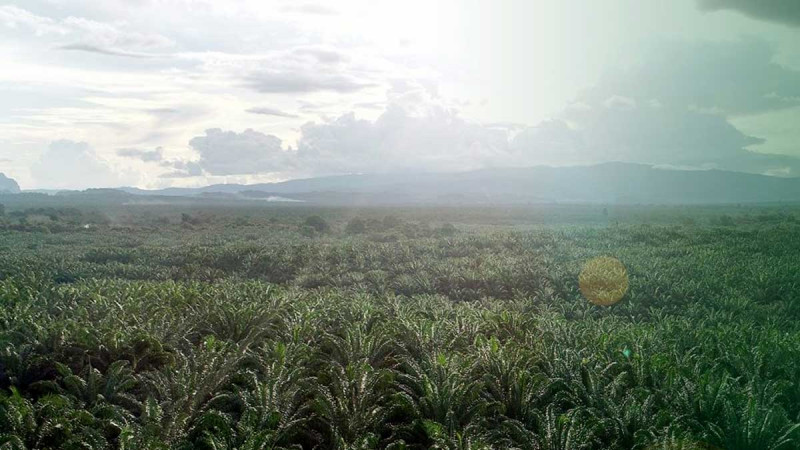
Palm oil remains a major contributor to Indonesia’s foreign exchange revenues, generating more than US$30 billion annually. Across producing regions—from Sumatra’s coastal areas to inland Kalimantan—plantations serve not only as commercial assets but also as critical economic drivers supporting local employment, supply chains, and rural development.
However, the prospect of land confiscation tied to productivity assessments has become a growing concern. On paper, such policies aim to ensure optimal land utilization in the public interest. In practice, the situation is more complex. A number of plantation companies deliberately allocate portions of their HGU areas for conservation purposes, including High Conservation Value (HCV) and High Carbon Stock (HCS) zones, in line with sustainability commitments.
These conservation areas are maintained not due to neglect but to comply with international sustainability standards such as the Roundtable on Sustainable Palm Oil (RSPO) and Indonesian Sustainable Palm Oil (ISPO). Such certifications are increasingly essential for access to global markets.
Stakeholders caution that if these designated conservation zones are interpreted as idle or underutilized land under new regulatory frameworks, sustainability commitments could inadvertently be penalized. This could create a policy contradiction whereby environmental stewardship is viewed as a management lapse rather than a compliance measure.
Land overlap remains another persistent challenge in Indonesia’s agrarian governance. Conflicts between concession maps, forest area designations, and customary land claims continue to occur. Without addressing underlying structural issues—such as the effective implementation of the One Map Policy—tightening HGU regulations may add administrative complexity without resolving tenure disputes.
Under current regulations, HGU permits are typically granted for 25 to 35 years and may be extended. For investors, such tenure arrangements are expected to provide long-term certainty. Any perceived instability in these legal instruments could significantly alter investment risk profiles, particularly in plantation sectors where assets require seven to eight years to reach optimal productivity.
Indonesia’s palm oil industry currently manages approximately 16.3 million hectares of plantation land. Investments in this sector are inherently long-term, often involving commitments that span more than a decade. Regulatory uncertainty during such investment cycles could delay replanting programs, slow technological adoption, and affect broader industry expansion.
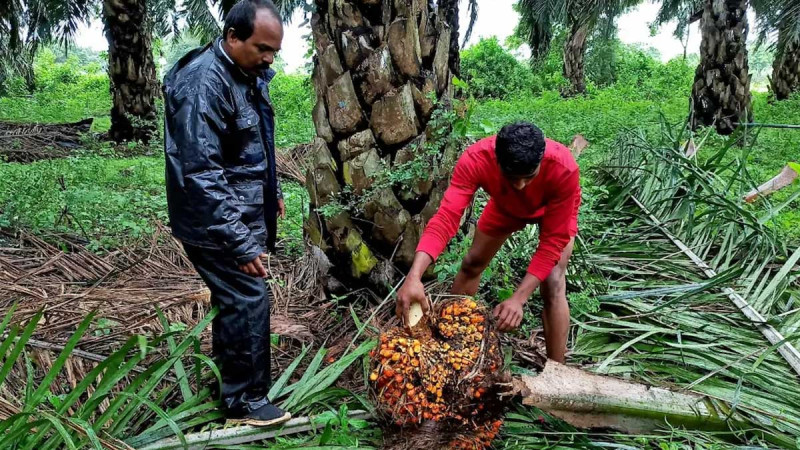
Beyond corporate interests, potential policy distortions may have systemic implications. Smallholders, plantation workers, and supply chain actors who depend on industry continuity could be indirectly impacted. At the macroeconomic level, prolonged uncertainty could influence export performance and economic growth targets.
Amid global market volatility—ranging from trade tensions to evolving environmental standards—Indonesia’s palm oil sector increasingly relies on legal certainty as a stabilizing factor. As sustainability becomes integral to market access, aligning land governance frameworks with environmental compliance standards will be essential to maintaining the sector’s competitiveness and investment appeal. (*)
Author: Edi Suhardi / Sustainable Palm Oil Analyst
Disclaimer: This article reflects the author’s personal views and is solely the author’s responsibility. It does not represent the views of InfoSAWIT.