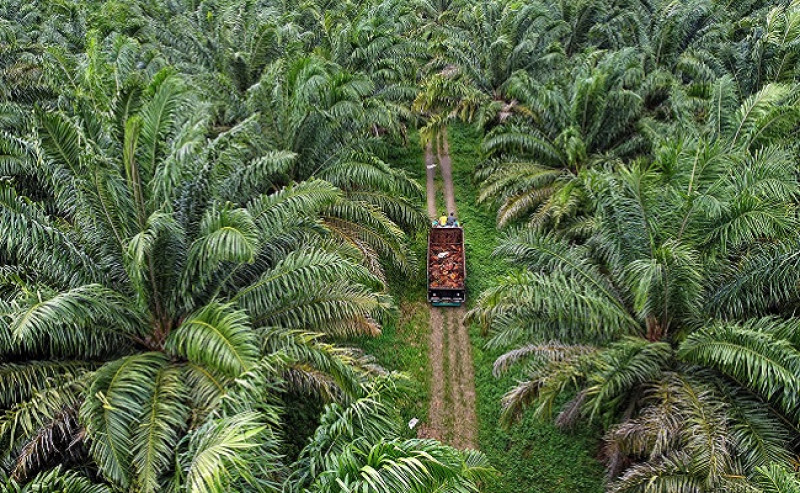
InfoSAWIT, JAKARTA – Palm oil (Elaeis guineensis) derived from West Africa that grow well in tropical climate. It is very popular as palm oil source that is applied by many industries, including food, cosmetics, and vegetable fuel.
Palm oil could develop up to 20 meter high. It has long leaf with strong stalk. Its fresh fruit bunch (FFB) is red or orange. The FFB could be big in every stalk. Every FFB could contain of 1.000 seeds and every seed is full of oil.
Palm oil production is very important for the economy globally namely in Southeast Asia and Latin America. But palm oil is also the source of controversy because of deforestation, unsustainable land use, the negative impacts for the environment and local people.
To promote sustainable production, some certification programs have been launched, such as, RSPO (Roundtable on Sustainable Palm Oil) and ISPO (Indonesian Sustainable Palm Oil). The goals are to make sure that palm oil would be responsibly produced by noticing rights of workers, local people, and maintain the environment remain good.
Advantages of Palm Oil
Palm oil has lots of advantages, such as, source of vegetable oil. It is the main source applied to many food products and cosmetics. Palm oil could be used as vegetable oil for industrial machine and vehicle.
Escalating economy, palm oil production could highly contribute to revenue for each producer, such as, Malaysia and Indonesia. Palm oil industries hire many workers, escalating the local people’s economy.
Source of nutrition, FFB contains of significant mineral and vitamin, such as, vitamin E and A, and unsaturated fatty acid. Palm oil is also applied in food product which is full of vitamin and mineral.
Fuel for industries, besides being as source of vegetable oil, palm oil can be used as material for many industries, such as, soap, detergent, candle, and biofuel. Recovery for degraded areas. Palm oil could recover degraded areas, such as, former mining areas or deforestation. Planting palm oil sustainably would escalate soil quality and minimize erosion.
Negative Impacts
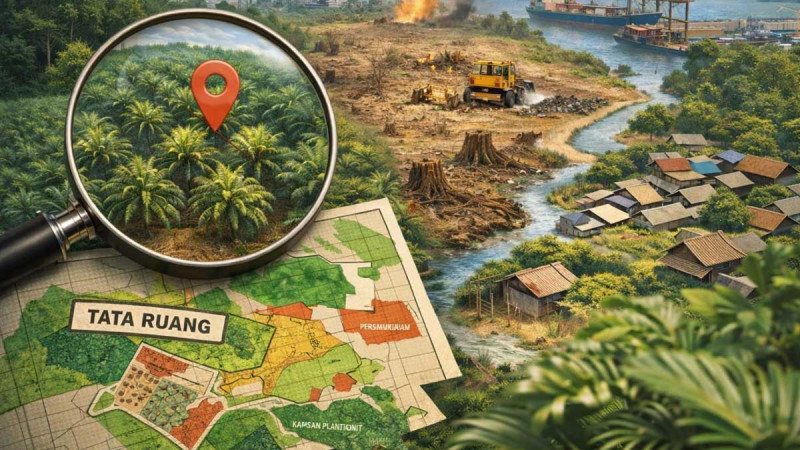
Besides having lots of advantages, palm oil has negative impacts that need to notice and should be well managed through sustainable practices. The impact negatives are to environment. Palm oil production always relates to environmental damages because forest cut and peat. these could make natural habitat gone and worsen climate change.
Palm oil is one kind of monoculture plantation because it is said, palm oil concentrates to one plantation and could escalate the risks to pest or disease attack.
Raise social issue, palm oil is always linking with social issues, such as, area conflict and force that would make worse impact to the local society.
Taken as not-environmental, palm oil production could influence ecology balance and potentially raise social issue. That is why it needs action to maintain sustainable production to remain sustainable for many years to go.
Still depends on marke, palm oil is one major commodity in Indonesia and it depends on the markets and escalates unstable price change risks.
Palm Oil Industries
Palm oil industries are the industries that operate or produce kinds of product, such as palm oil, its derivative products, such as, margarine, soap, cosmetics, and biomass. Palm oil could grow well in tropical areas, such as, in Malaysia and Indonesia, and some others. Indonesia is the biggest palm oil producer in the world within about 40 - 50% of the total production in the world.
Its production starts from FFB harvest in the plantations. FFB would be transported to mills and has some phases, such as, the separation of FFB and bunch, separation of kernel from its mesocarp, process kernel to be crude palm oil, filter CPO, and purifying kernel oil to be palm oil – ready to be sold.
According to the data from Ministry of Industry in 2020, there were 3.636 business units that had something to do with palm oil industries in Indonesia, including the mills, refinery, and downstream products, such as, oleochemical, biodiesel, and others.
As the biggest palm oil producer in the world that reached 43,5 million tons in 2020, palm oil industries in Indonesia significantly contributed to the revenue and economy by hiring 6,5 million workers in every palm oil supply chain.
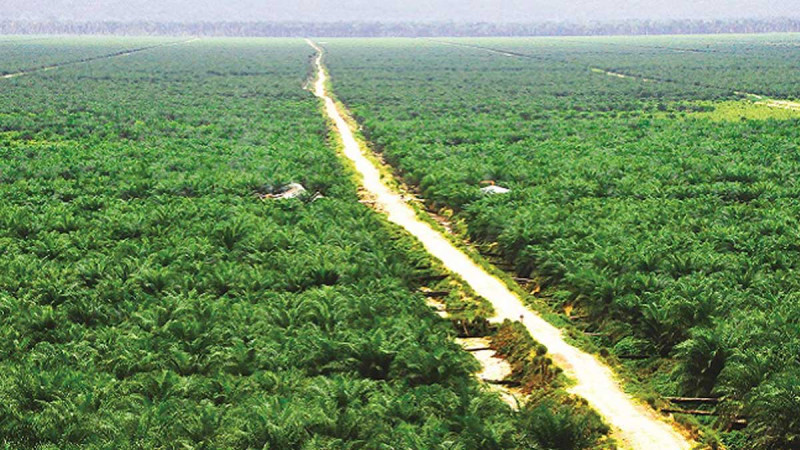
Data from Ministry of Agriculture revealed that in 2021 palm oil plantations in Indonesia laid about 16,32 million hectares.
Of the numbers, about 12,42 million hectares were official and acknowledged by the government.
About 3,9 million hectares were illegally developed or without permit. The Government of Indonesia keeps trying to solve illegal palm oil plantations, escalating supervision and implementing sustainable and environmental cultivation.
Economy Impact
For having massive advantages in daily life, palm oil is potentially increasing the economy in the nation.
It is one major export commodity from Indonesia that delivers economic advantages for the country and the people. Here are some advantages from palm oil: it highly contributes to revenue. Palm oil exports delivered big revenue for the country. Indonesia also supplied 60% of the total supply in the world. In 2020 according to Central Bureau of Statistic, palm oil exports reached US$ 20,47 billion. The numbers decreased about 13,6% compared to 2019 that reached US$ 23,68 billion. Though they decreased, palm oil is the main export commodity from Indonesia that significantly decreased to the economy nationally.
It also escalates the smallholders’ income. Palm oil is the living source for 3,5 million smallholders. Its cultivation delivers stable and high income for the smallholders and escalate their economy. It also develops economy in many villages.
Not only that palm oil is proved to be one sector that hires many workers. Palm oil industries provide employment to about 6 million men in Indonesia. Besides the smallholders, palm oil industries need workers (labors) in processing, transportation, and marketing.
It develops infrastructures. Palm oil industries need good infrastructures, such as, way, and airport to transport and distribute palm oil products. Developing infrastructures could open the chance to develop other economic sectors.
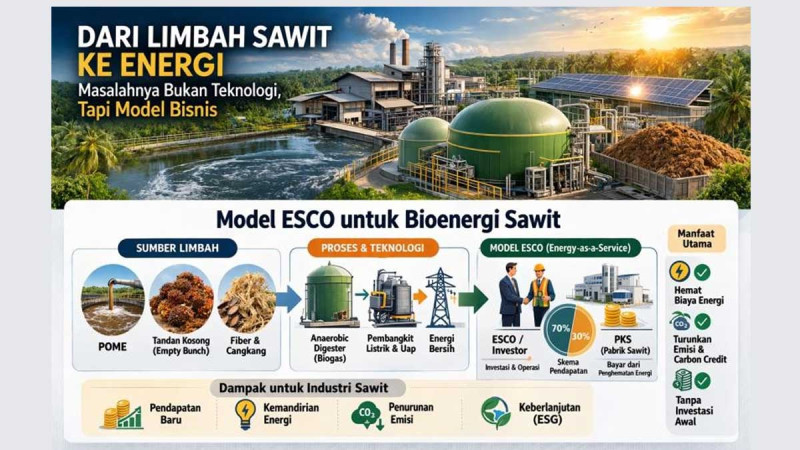
It contributes to escalate renewable energy production. Vegetable fuel or biofuel from palm oil can be taken for advantages as the source of renewable energy. This could help decrease the dependence on fossil energy, and contribute to escalate renewable energy production.
But it needs to underline that palm oil industries have many negative impacts for health and environment. It needs the right on – target regulation to minimize the negativity but maximize economic advantages. Palm oil industries are significant to develop Indonesia’s economy. (*)
By: Muhammad Robby Habib Fahrin / Student of Universitas Nahdlatul Ulama, Sidoarjo