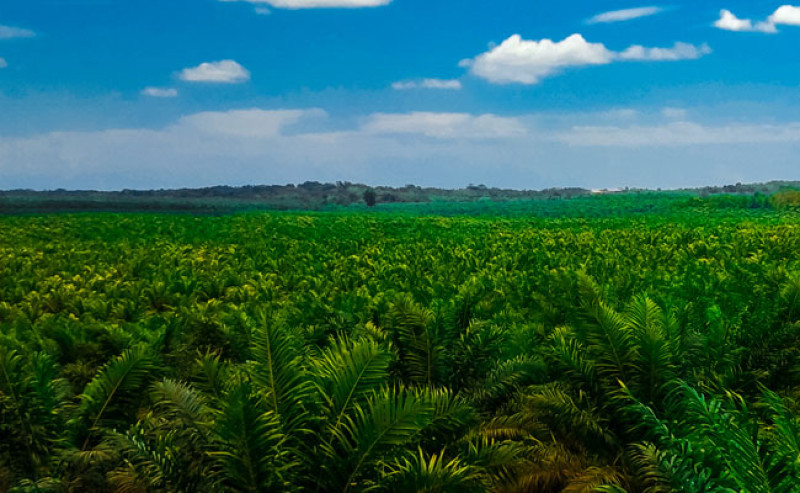
InfoSAWIT, JAKARTA – Palm oil plantations is the promising sector now and in the future. Indonesia the plantations laid about 16,38 million hectares. The question remains, what is valuable asset in the plantations?
The public may know that palm oil has become the material for many industries both food, drink, cosmetic, medicine, machines, and land transportation. Palm oil is now becoming part of aviation industries because palm oil could be processed to be aviation turbine.
To cultivate palm oil plantation, of course, there are valuable things. If the valuable things are ignored, one thing for sure, the plantation would not achieve the success or have high profits.
What are the valuable assets in palm oil plantations? Here we go.
The trees
Palm oil trees are the main asset that determine the company to get high profits or not. This is the first-class plantation or the plantation develops within normal condition only.
It needs to notice the trees starting from the seeds because ‘everything starts from here’.
It is a must to plant superior seeds within high tonnage and oil extraction rate (OER) to get crude palm oil (CPO) production up to 7,5 tons/hectare (ha)/year. The numbers are from fresh fruit bunch (FFB) that could produce up to 30 tons within OER 25%. In the other word, it could make about Rp 6 million per ha, while the production cost is about Rp 1,3 million/ha.
The trees are money makers for the companies. That is why the trees should not be attacked by diseases, pest, could be still productive until 25 years, well cultivated within the best agricultural practices, high numbers of trees per hectare (standard > 136 trees/ha of immature trees, and 120 trees/ha for old ones).
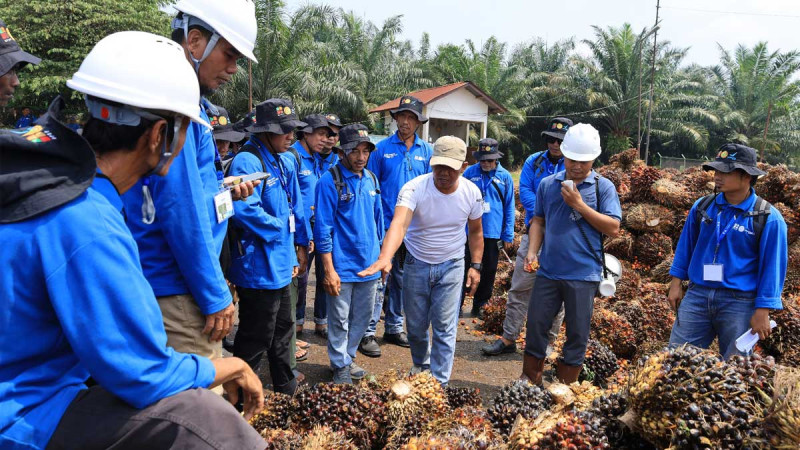
The Harvesters
Harvesters are the lowest level of worker but have ‘the most valuable price’. They would bring FFB from the trees to the gathering spots which mostly are on the sides of the way to be transported to the factory easily and processed to be crude palm oil within better price.
It needs to manage the harvesters well as the assets but they have to be discipline based on standard operating procedure to cut off the FFB to give maximal outcome, such as,
7 days of harvesting.
The schedule to harvest is the core of harvesting. This is the source to succeed the harvest process. If seven days of harvesting runs, there would be maximal production to get because FFB would not be rotten which makes big losses.
That is why time to harvest should tightly maintain in every seven days. If the harvesting is more than 7 days, it needs to work in weekly. But if there are not many harvesters, those who work in the nursery process are obliged to harvest to shorten the circular harvesting to be 7 days.
In the 7 day – circular, the assistant should be helped by foremen to tightly monitor the harvester in every single day so that the harvesters would not harvest the raw FFB to escalate the numbers. To prevent it, it needs to create a system – if the harvesters cut off the raw FFB, they would get cheaper income because they are highly fined. The harvest foremen, first foreman, the assistant, and estate manager should check it in every single day.
7 Discipline Ways to Cut off FFB
- Mature FFB should be cut off in a whole.
- Raw FFB 0 percent.
- There should be no dispute midrib.
- The midrib should be arranged in the dead net.
- Should pick every seed.
- FFB and seeds should be well arranged in the gathering spots.
- The administration should be well checked and on time.
By: Ahmad Hulaimi / Writer - Palm Oil Plantation Practitioner
For more, please read InfoSAWIT, March 2021