InfoSAWIT, JAKARTA - Smallholders replanting program (SRP) becomes the way to escalate smallholders’ palm oil plantation productivity, encourage to implement sustainable practice based on Indonesian Sustainable Palm Oil (ISPO).
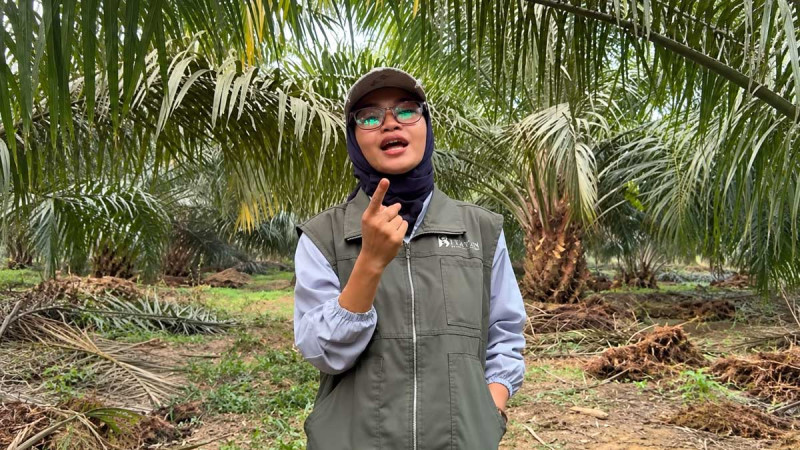
One of many programs in Palm Oil Plantation Fund Management Agency (PFMA) is SRP. This is about to encourage smallholders’ palm oil productivity, welfare the people (smallholders), avoid new plantings, and stop land use change from forest region or land use land use change and forestry (LULUCF).
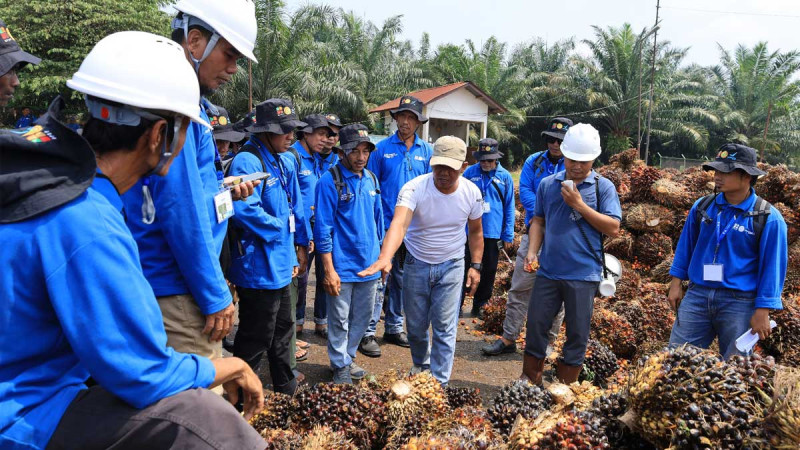
PFMA keeps training and developing smallholders in the forms of human resource development by delivering trainings, education, counseling, and facilitations.
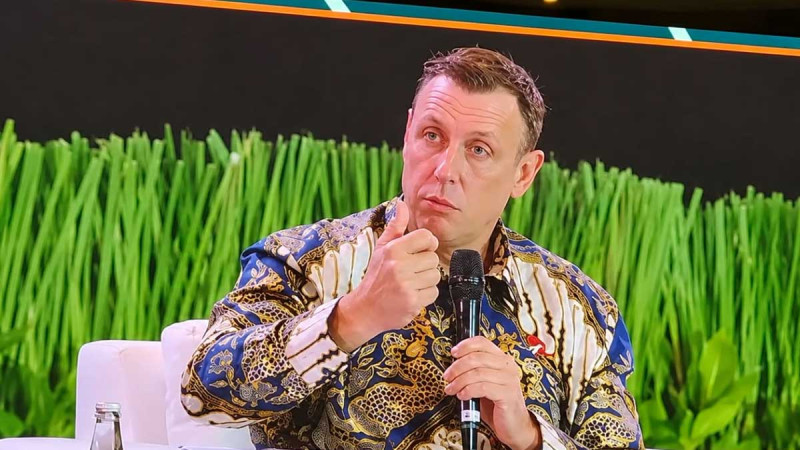
Head of Corporate Division PFMA, Achmad Maulizal thought, the institution supports sustainable cultivation realization. That is why PFMA did distribute fund for other sectors, such as, in smallholders replanting program to escalate the smallholders’ plantation productivity.
Maulizal continued, the smallholders’ plantation productivity just reached 2 to 3 tons of crude palm oil (CPO)/hectare/year. Meanwhile big private plantation companies could produce 5 to 6 tons of CPO/hectare/year. There have been gaps, of course but by having SRP within superior seeds, the smallholders’ plantations would be in higher production.
“In addition, the people’s palm oil plantations laid about 41% of the total in Indonesia,” he said in he said in Focus Group Discussion (FGD) SAWIT BERKELANJUTAN VOL 12, with the theme “Mendorong Keterlibatan Masyarakat Perdesaan Hasilkan Minyak Sawit Berkelanjutan”, that InfoSAWIT did and supported by Palm Oil Plantation Fund Management Agency (PFMA) by the late of January 2023 in Jakarta.
He also mentioned, SRP would be significant to solve productivity and escalate their economy. “PFMA offers fund to develop SRP by advantaging palm oil export citation,” he said.
At principle, Maulizal told the smallholders are encouraged to join the program and should notice the legal aspects. For those who do not have the legal, they would get development help to immediately get legal rights on their areas and should join sustainable principles that cover area, conservation, environment, and institution.
It needs to confirm sustainable principles, participants of the program should get ISPO certificate in the first harvest. “The productivity standards in SRP should be 10 tons of FFB per hectare per year within plantation density < 80 trees/hectare,” Mauli said.
He thought, SRP would be positive for the environment because palm oil productivity would increase from 2 to 3 tons of CPO per hectare per year to be 4,8 to 7,2 tons of CPO per hectare per year; would support the potential of new planting that could be laying up to 1 million hectares. “The smallholders’ economy would be increasing as well,” he said.
But SRP does not run smooth as it was predicted. Maulizal mentioned, there are two groups of challenge to notice, they are, the first, area status. Many smallholders namely independent ones have plantations in different location (not in one overlay); their area status is not clear, they do not implement sustainable practices based on good agricultural practices, and the low potential to get ISPO certificate.
The other is the smallholders’ status, for instance, their social economic status which is different one to another, do not have banks (to save income), no legal institution, the lack of trainings and development, and do not have partnership.
In general, PFMA launched three models of fund distribution, such as, the first, fund supports and added by the smallholders themselves; the second, fund support and get credits from banks; and the third, fund support and added by the capital of the smallholders, and get credits from banks. (T2)
Source: InfoSAWIT, February 2023