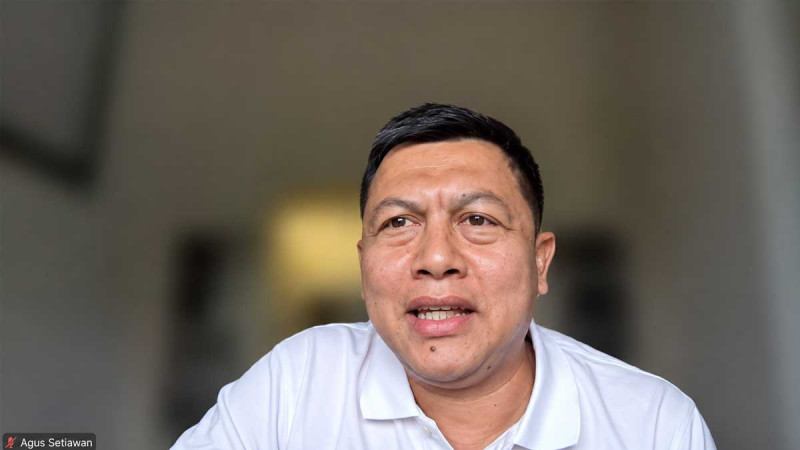
InfoSAWIT, BALI – Samuel Hamonangan Lubis, Sales Industrialization Manager at Pertamina Patra Niaga, reaffirmed Indonesia's commitment to accelerating energy transition through the development of sustainable biodiesel. He conveyed this during the International Conference on Oil Palm and Environment (ICOPE) Series 2025 on the third day at Bali Beach Convention, attended by InfoSAWIT, on Friday, February 14, 2025. According to him, bioenergy is key to reducing dependence on fossil fuels, which are deemed a threat to environmental sustainability.
“The government has taken strategic steps by implementing the B40 biodiesel policy starting January 1, 2025. This is the foundation for energy resilience,” said Samuel. He added that plans for a B50 biodiesel trial next year and a target for B100 in the future must be carefully prepared to ensure sustainable clean energy.
Despite his optimism, Samuel acknowledged several challenges. First, the production scale of biodiesel is not yet optimal, even though the government provides incentives for farmers and producers. Second, technical constraints such as vehicle engine adaptation to high biodiesel blends. “Technical issues remain a barrier, especially in achieving B50 and beyond,” he explained.
Pertamina's data shows that biodiesel usage has significantly increased, from 9.4 million kiloliters (2021) to 15.61 million kiloliters in 2025. In 2026, it is projected to reach 19.52 million kiloliters, valued at around Rp290 trillion. “This is a great opportunity for palm oil farmers and producers, but prices must remain competitive,” Samuel emphasized.
Price as a Determinant of Sustainability
The issue of biodiesel pricing is considered crucial. Currently, biodiesel prices range from Rp22,650 to Rp22,900 per liter, significantly higher than regular diesel such as Dexlite (Rp14,600/liter) and Pertamina Dex (Rp14,800/liter). “Customers are complaining about the prices. Producers must find solutions to keep biodiesel affordable. The industry cannot wait,” he asserted.
As an alternative, Pertamina is developing Hydrotreated Vegetable Oil (HVO), which is more environmentally friendly. Samuel emphasized that the future of biodiesel in Indonesia depends on the synergy between the government, producers, and society. “President Prabowo Subianto has emphasized that we must be independent and no longer rely on imports,” he concluded.
With the projected increase in global demand for green energy, Indonesia is expected to become a key player in the global biodiesel market, provided that economic and technical challenges can be collaboratively addressed. (T2)