InfoSAWIT, SANUR – Deputy Minister of Agriculture, Sudaryono, highlighted the challenges faced by Indonesia's palm oil industry, including the impacts of climate change and international regulations such as the European Union Deforestation-free Regulation (EUDR). During the conference held today, he emphasized the importance of sustainable plantation management to keep the palm oil industry competitive in the global market.
To address global challenges, the government has implemented the Cultivation Registration Certificate (STDB) for farmers with less than 25 hectares of land. This program aims to gather data on smallholder ownership, facilitate farmers' access to funding from the state budget and other sources, and establish sustainable plantation management as a requirement for Indonesian Sustainable Palm Oil (ISPO) certification.
To ensure the sustainability of the palm oil industry, the government mandates ISPO certification in accordance with Minister of Agriculture Regulation No. 38 of 2020. ISPO regulates various environmental aspects, including greenhouse gas emission mitigation, biodiversity conservation, and the management of waste and hazardous materials in the palm oil supply chain.
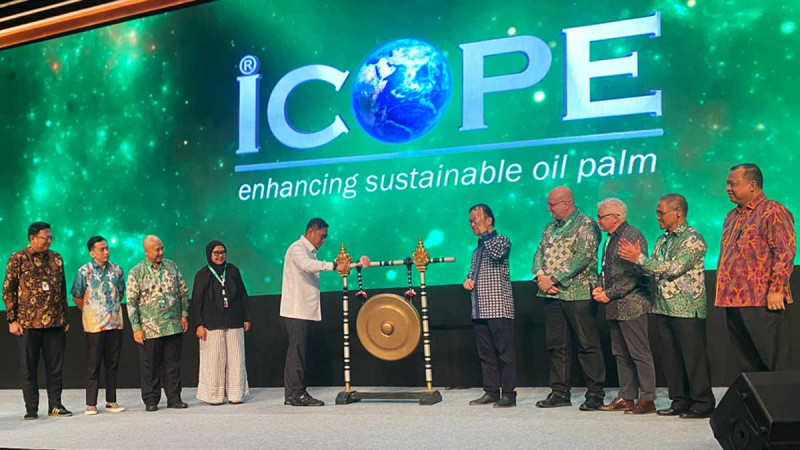
"We continue to encourage all stakeholders, including farmers, to obtain ISPO certification to enhance productivity without harming the environment," said Sudaryono while opening the 7th International Conference of Oil Palm and Environment (ICOPE) attended by InfoSAWIT in Sanur, Bali, on Wednesday (February 12, 2025).
Sudaryono also invited all stakeholders—government, private sector, NGOs, and farmers—to continue developing sustainable agricultural practices and improving sustainability standards in the palm oil industry.
"We must work together to ensure that the palm oil industry remains competitive and sustainable," he stated.
In closing his remarks, he expressed hope that these efforts would benefit all parties in realizing an environmentally friendly and sustainable palm oil industry. (T2)