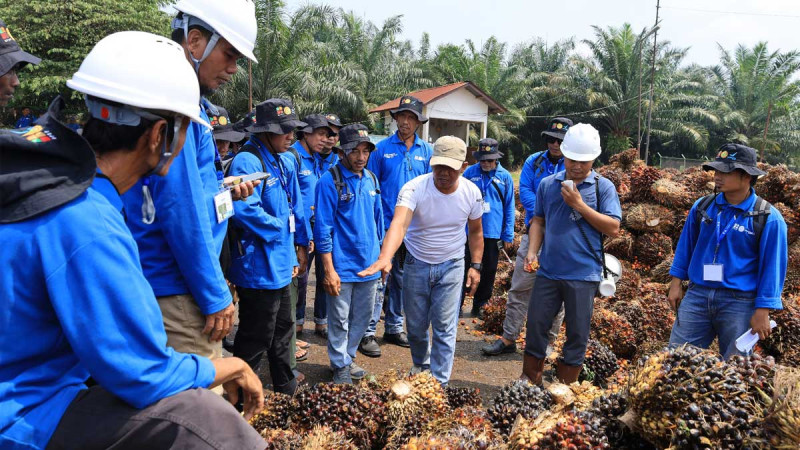
InfoSAWIT, JAKARTA – Vice Minister of Agriculture, Sudaryono encouraged the smallholders – the members of Asosiasi Petani Kelapa Sawit Indonesia (Apkasindo) to increase their plantation productivity nationally. He thought, palm oil plantations played significant roles in the economy of Indonesia.
He targeted the fresh fruit bunch (FFB) productivity should be up to 17 tons per hectare per year, nearly the same with Malaysia that reached 18 tons per hectare per year. “We have to get 17 tons FFB per hectare per year, at least, the numbers would be closer to Malaysia,” he said when delivering speech in the coordinator inauguration of Apkasindo in 2024 at the main auditorium of Ministry of Agriculture, as InfoSAWIT quoted, Friday (11/10/2024) in Jakarta.
He continued, the government would be committed to maintain palm oil as the strategic commodity, not only as the pillar of economy but also increase the smallholders’ welfare. Indonesia now masters about 50 percent of palm oil trade in the world and showed that palm oil would be significant in the national scale – exports.
He also said that it would be significant to realize palm oil downstream sectors, including biodiesel development up to B50 as the strategic thing to minimize diesel imports. “We succeeded to develop B35 and it is hoped B50 could minimize 100 percent diesel imports,” he said by continuing that palm oil downstream development would lead Indonesia to get energy independency and escalate crude palm oil (CPO) additional values.
Besides encouraging the plantation productivity, he also took the smallholders to realize intercrop program with paddy gogo as the way to support national scale - energy security. Ministry of Agriculture targeted to plant paddy gogo in 500 thousand hectares palm oil and coconut plantations through Kelapa Sawit Tumpang Sari Tanaman Pangan (Kesatria). It is hoped this would increase paddy production and optimize the plantation area use.
“By conducting intercrop program in palm oil plantation, we could take advantages on the available areas to be more productive and contributing to food security nationally,” Sudaryono said. (T2)